MORRIS COUNTY — The Morris Choral Society is calling for singers to join the ensemble ahead of its upcoming holiday program.
The group performs all forms of choral music, including works by composers such as Handel, Orff, Verdi, Poulenc, Brahms and Vaughan Williams. Its next program, titled “Home for the Holidays Goes to the Movies,” will be held at two locations over a weekend in December: 7:00 p.m. on Friday, December 11, at Assumption Church in Morristown, and 3:00 p.m. on Sunday, December 13, at Trinity Lutheran Church in Morris Plains.
The group is open by audition and attracts members of all ages and backgrounds. Interested singers should attend a rehearsal on September 14, 21, or 28, at 7:30 p.m. at Trinity Lutheran Church, 131 Mountain Way in Morris Plains. For questions or to arrange an audition, call (973) 723-6424.
MORRIS COUNTY — Governor Mikie Sherrill signed legislation requiring data centers to disclose their water and energy use during an event Thursday morning at the South Brunswick Public Library auditorium, completing a four-part data center plan she first outlined in May.
The event, framed around a theme of giving power back to communities, brought the statewide debate over rapidly expanding data center development directly to South Brunswick, a township where the issue is not theoretical. Mayor Charlie Carley said during the event that two data centers have operated in the township for decades, while a newer data center development reflects the changing landscape facing municipalities across the state.
“Decisions about the future of our communities should be made here, not in boardrooms or backrooms in Silicon Valley,” Sherrill said. “We don’t have to choose between innovation and accountability, and we won’t.”
Four Guardrails Now in Place
Sherrill first announced the state’s data center strategy on May 27, describing four priorities: requiring data centers to pay their fair share of energy and infrastructure costs, increasing transparency, helping municipalities secure community benefits, and creating good-paying jobs. Two of those priorities have now been enacted through legislation.
The first, the Data Center Fair Share law, was signed July 7. It establishes a separate electricity rate structure for large data centers so that residential and other utility customers are not left subsidizing the power and grid infrastructure needed to serve them. Utilities must develop rules assigning data-center-related costs directly to those customers, with financial protections in place in case a project ultimately uses less electricity than expected.
The second measure, signed Thursday, requires data center owners and operators in New Jersey to report their water and energy usage to the state Board of Public Utilities every six months. The reports must detail total energy consumption, electricity used by information technology equipment, on-site power supplies, total water use, and where that water comes from. The reporting requirement runs for three years initially, after which the board can decide whether to make it permanent.
Sherrill said residents deserve that information before large developments move forward. Senate Majority Leader Teresa Ruiz, a sponsor of the legislation, said municipalities have too often had to evaluate major projects using information supplied mainly by the developers themselves. Assemblyman Michael Venezia, an Assembly sponsor, said the consistent reporting will give state and local government a clearer picture of the industry’s demands.
Community Benefits and Labor Standards
The third piece of the plan centers on Community Benefits Agreements, which allow municipalities to negotiate legally binding terms with developers to address local impacts and secure benefits for their communities. Rather than new legislation, the state implemented this piece through guidance from the Department of Community Affairs and a new Data Center Municipal Resource Hub launched by the New Jersey Economic Development Authority, which offers municipalities technical assistance on grid and interconnection filings, water use projections, tax impact estimates, and benefits agreement terms.
The fourth priority addresses labor standards. The administration has issued guidance calling for prevailing wages on qualifying data center construction projects and encouraging project labor agreements on larger developments.
No Statewide Moratorium
Much of the question-and-answer portion of the event focused on whether New Jersey should go further and pause large data center development statewide, an approach New York has taken with a one-year moratorium on certain projects. Sherrill rejected that idea, saying municipalities already have the authority to make their own decisions and, if they choose, impose their own local restrictions. She said some towns with large industrial areas may see data centers as a good fit, while others may not.
Sherrill said there is no single statewide threshold for acceptable water or electricity use, since conditions vary by community, and that those questions need to be worked out during project review and negotiation, followed by state oversight to ensure developers follow through on their commitments.
Allison McLeod, interim executive director of the New Jersey League of Conservation Voters, said transparency is essential for officials to understand the industry’s effect on electricity, water, and the environment, and that families and small businesses should not have to absorb higher energy costs created by some of the world’s largest electricity consumers.
MORRIS COUNTY — The Morris County Clerk’s Office is continuing to process vote-by-mail ballots in accordance with New Jersey state law, according to county officials. Ballots will begin mailing on September 19.
The state remains involved in litigation with the federal government concerning vote-by-mail procedures, and the outcome of that litigation remains pending.
Morris County voters who do not wish to receive a vote-by-mail ballot at this time may opt out by completing the Vote-by-Mail Voter Opt-Out Form, available on the Morris County Clerk’s website. Opt-out requests must be submitted no later than Monday, August 31.
In-Person Voting
Once an opt-out request has been received and processed, voters may cast ballots during the state’s early voting period, at one of eight early voting locations, or at their assigned polling location on Election Day, Tuesday, November 3.
Morris County’s eight early voting locations will be open from October 24 through November 1, with hours of 10:00 a.m. to 8:00 p.m. Tuesday through Saturday and 10:00 a.m. to 6:00 p.m. on Sunday:
Central Park of Morris County — 2 Executive Drive, Morris Plains
Denville — 1 Saint Mary’s Place, Denville
Hanover — 15 North Jefferson Road, Whippany
Madison — 50 Kings Road, Madison
Morristown — 200 South Street, Morristown
Mount Arlington — 18 North Glen Avenue, Mount Arlington
Mount Olive — 204 Flanders-Drakestown Road, Mount Olive
Voters who opt out of receiving a vote-by-mail ballot may resume receiving ballots in future elections by submitting a new vote-by-mail application through the Morris County Clerk’s website.
Voters who continue to receive vote-by-mail ballots are strongly encouraged to return their completed ballots by mail at least seven days before Election Day, or deposit them in a secure ballot drop box.
For more information or assistance, contact the Morris County Clerk’s Elections Division at [email protected] or (973) 285-6066.
DOVER — Station Burger has opened at a corner that had sat vacant for months following extensive renovations, filling a space long occupied by a local Chinese restaurant that had been a staple for residents. Station Burger is located at 265 East Blackwell Street.
The property drew steady attention from residents as construction and renovations transformed it over several months, with many wondering what business would eventually take over the corner.
Signage on the windows announced Station Burger’s grand opening earlier this month. Social media posts from the business suggest a burger-focused menu with possible Latin or Latin fusion influences, though the concept has not been officially confirmed by the owners.
The hours are Monday through Thursday – 11:00 a.m. to 10:00 p.m. and Friday through Sunday – 11:00 a.m. to Midnight.
JEFFERSON TOWNSHIP — The Jefferson Township High School girls soccer team is holding a car wash fundraiser today, Sunday, from 9 a.m. to 2 p.m. at Jefferson Township Fire Company No. 2, located on Route 15 South.
Donations will be accepted in support of the team, with organizers thanking the community for its support of the program.
FREEHOLD — Governor Mikie Sherrill signed legislation this week making permanent a pandemic-era policy that allows New Jersey restaurants, bars and other eligible businesses to sell and deliver alcoholic beverages for off-premises consumption. The rules, first put in place during the COVID-19 pandemic, had been set to expire September 1.
The new law, Senate Bill 4384, allows retail consumption licensees such as restaurants, hotels and bars to continue selling mixed cocktails in closed, tamper-evident containers for takeout, as well as delivering sealed cocktails and malt beverages such as beer and hard seltzer either directly or through licensed third-party services. Craft distillery licensees are also granted added flexibility to sell and deliver their own products under certain conditions.
“Cocktails to-go worked, customers liked it, and small businesses told us it was another way to bring in revenue,” Sherrill said in a statement announcing the signing.
State officials pointed to National Restaurant Association research showing that in states where alcohol-to-go is allowed, a large majority of wine, beer and cocktail drinkers said they were more likely to choose a restaurant for delivery based on the option, underscoring the potential revenue boost for New Jersey’s hospitality industry.
State Senator Vin Gopal, a sponsor of the bill, said the change gives hospitality businesses a lasting way to generate revenue while keeping safeguards in place for alcohol sales and delivery. State Senator Declan O’Scanlon, who also backed the measure, called it a commonsense extension of a policy that helped restaurants survive during the pandemic. Assemblywoman Luanne Peterpaul said making the rules permanent gives small businesses added tools to grow without being slowed by unnecessary red tape.
Matthew Borowski, owner of 618 Restaurant and The Death of Hospitality Group in Freehold, where Sherrill signed the bill, said the option to send a piece of his business home with guests matters for a family-owned operation. Daniel Klim, president and chief executive officer of the New Jersey Restaurant & Hospitality Association, said the law preserves a popular option for customers while giving restaurants and bars an added revenue stream.
New Jersey now joins more than 30 other states and Washington, D.C., that have made similar cocktails-to-go provisions permanent since they were widely adopted as a pandemic relief measure.
Celularity Manufacturing Deal Could Bring $300 Million, 200 Jobs to Florham Park
FLORHAM PARK — Biotech firm Celularity Inc. has entered a new manufacturing collaboration that could bring $300 million in business and more than 200 jobs to its Florham Park facility.
The agreement, announced August 27, includes an initial project with Singapore-based MuseCell Innovations Pte. Ltd., with the possibility of additional ventures to follow. Under the deal, Celularity will establish manufacturing capability for Dezawa MuseCells at its 147,215-square-foot Florham Park site.
Muse cells are a naturally occurring, stress-enduring cell population discovered by Dr. Mari Dezawa. According to the companies’ announcement, the platform pairs qualified starting materials with the licensed Dezawa Method and MuseCell Innovations’ product specifications covering identity, purity, viability, potency, traceability and lot release.
If the initial project succeeds, Celularity and MuseCell Innovations intend to broaden the partnership to include additional products and programs. That expansion could push Celularity’s aggregate purchases from the collaboration past $300 million over the next five years, and could bring more than 200 high-tech jobs to the Florham Park site spanning biomanufacturing, quality control, engineering and support roles.
Celularity founder, chairman and chief executive officer Dr. Robert Hariri said the partnership shows how the manufacturing infrastructure and cellular expertise the company has built can support outside technologies as well as its own. “We look forward to expanding U.S. manufacturing for the Dezawa MuseCell platform,” Hariri said.
Dr. Dominik Duscher, chief executive officer and president of MuseCell Innovations, said Celularity offers the infrastructure and technical depth needed to establish U.S. manufacturing using qualified bone marrow, adipose and perinatal sources.
Governor Mikie Sherrill highlighted the announcement on social media, noting she first visited Celularity in 2022 and pointing to the company’s growth from a New Jersey startup into a publicly traded company as a sign of the strength of the state’s innovation economy. She added that as advanced biomanufacturing continues to grow, “New Jersey is open for business.”
The announcement comes as New Jersey has faced scrutiny over a string of corporate relocations and downsizings. A recent analysis examining eight companies that either scaled back New Jersey operations or expanded and relocated elsewhere estimated those decisions cost the state more than 7,200 jobs.
Revolutionary-era reenactors will bring history to life on the Morristown Green during Morris County's Living History Weekend, September 25-27.
MORRIS COUNTY — Morris County will host Living History Weekend from Friday, September 25 through Sunday, September 27 in Morristown, a three-day series of events highlighting the county’s Revolutionary War history as part of its ongoing commemoration of America’s 250th anniversary.
Programming will include Revolutionary-era reenactors and historic figures on the Morristown Green, special programs and tours at historic sites throughout Morristown, a Revolutionary history trivia night, and a History Corridor at the annual Morristown Festival on the Green.
“Living History Weekend gives people an opportunity to experience our history in the places where it actually happened. We are proud to help connect a new generation with the stories that helped shape our county and our nation during this historic year,” said Morris County Commissioner Director Stephen Shaw.
“Our goal was to create a weekend where people can choose from a variety of historic experiences happening throughout Morristown. We want families, residents and visitors to experience Morris County’s incredible history in a way that is fun, engaging and accessible,” said Sarah Neibart, executive director of the Morris County 250th Anniversary Celebrations Committee.
The three-day schedule includes:
Friday, September 25: Revolutionary History Trivia Night
Living History Weekend begins with Revolutionary History Trivia Night from 7:00 p.m. to 9:00 p.m. at Glenbrook Brewery. Participants can test their knowledge of the American Revolution and Morris County history.
Saturday, September 26: Living History Comes to Morristown
From 11:00 a.m. to 3:00 p.m., the Morristown Green will feature Revolutionary-era reenactors, historic figures and demonstrations. Activities will include a militia, eighteenth-century medical and weaponry exhibits, and a silhouette artist.
From 11:00 a.m. to 4:00 p.m., historic organizations throughout Morristown will also offer special programs, exhibits, talks and tours. Participating sites and programs include:
Macculloch Hall Historical Museum: Visitors can explore the historic museum and its nationally significant collection, including the nation’s largest single collection of original works by political cartoonist Thomas Nast.
Sansay House: The American Friends of Lafayette will share the story and legacy of the Marquis de Lafayette.
Presbyterian Church in Morristown: The Morris County Historical Society will present talks about local history and the people and events that shaped the community.
Additional historic sites and programs will be announced as the weekend approaches.
Sunday, September 27: History Corridor at Festival on the Green
Living History Weekend concludes Sunday from noon to 5:00 p.m. during the Morristown Partnership’s annual Festival on the Green. A special History Corridor will feature Morris County historic sites and organizations, providing information about the people, places and events that shaped Morris County and the nation.
Living History Weekend is presented by the Morris County 250th Anniversary Celebrations Committee, Morris County Board of County Commissioners, Morris County Tourism Bureau and F. M. Kirby Foundation, in partnership with the Morris County Chamber of Commerce and Morris County Economic Development Corporation, the Town of Morristown, Morristown Partnership, Trustees of the Morristown Green, Sanofi, Morristown Fire Department, participating historic sites and organizations, and other community partners.
Visitors can also explore Morristown and Morris County’s restaurants, breweries, shops, museums, parks and other attractions throughout the weekend. A special hotel room block is available at the Hyatt Regency Morristown for Living History Weekend attendees.
For additional information and the latest schedule, visit morriscounty250.com.
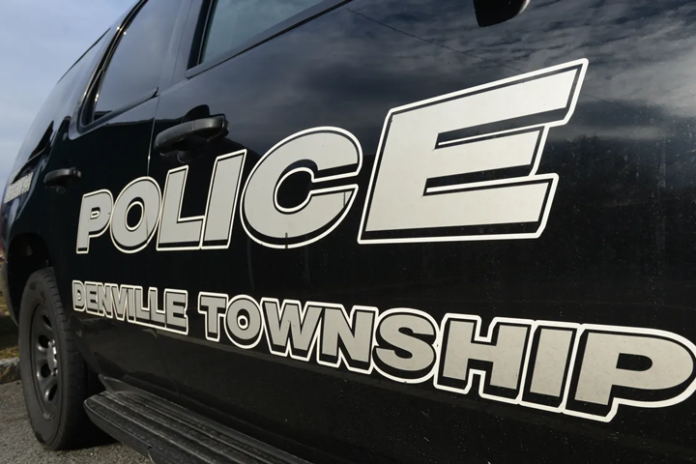
Photo for illustration purposes only. The actual incident may not reflect the photo.
MORRIS COUNTY — A Denville man was charged with unlawfully possessing and storing explosives and explosive materials, U.S. Attorney Robert Frazer said.
Joseph Rizos, 37, of Denville, is charged by complaint with one count of unlawful receipt of explosive materials, one count of unlawful storage of explosive material, and one count of unlawful possession of plastic explosives without a detection agent.
Rizos had an initial appearance before United States Magistrate Judge Leda Dunn Wettre in Newark federal court on Wednesday, August 26, and was ordered detained.
According to documents filed in the case and statements made in court, between April 2020 and June, Rizos purchased and received various explosive materials and other items, including fuels, fuses, precursor chemicals, and laboratory equipment from online retailers, which he stored at his residence in Denville.
On or about Wednesday, June 24, law enforcement searched Rizos’s residence and recovered from his bedroom, basement, and garage a home laboratory and laboratory equipment, detailed receipts for manufacturing multiple types of explosives, and a variety of suspected industrial and pharmaceutical chemicals that can be used to manufacture explosives. Investigators also recovered containers of suspected explosives from Rizos’s bedroom.
Rizos is charged with:
Unlawful receipt of explosive materials
Unlawful storage of explosive material
Unlawful possession of plastic explosives without a detection agent
Counts one and three of the complaint each carry a maximum sentence of 10 years in prison and a $250,000 fine. Count two carries a maximum sentence of one year in prison and a $100,000 fine.
The investigation was led by special agents of the Joint Terrorism Task Force of the Federal Bureau of Investigation, under the direction of Special Agent in Charge Stefanie Roddy in Newark; the Drug Enforcement Administration, under the direction of Special Agent in Charge Towanda R. Thorne-James; the Bureau of Alcohol, Tobacco, Firearms and Explosives, Newark Field Division, under the direction of Acting Special Agent in Charge Beau Kolodka; the New Jersey State Police, under the direction of Acting Superintendent Jeanne Hengemuhle; the Morris County Sheriff’s Office, under the direction of Sheriff James M. Gannon; and the Morris County Prosecutor’s Office, under the direction of Prosecutor Robert J. Carroll.
Assistant U.S. Attorneys Casey Smith and Vincent D. Romano of the office’s National Security Unit in Newark are prosecuting the case. Rizos is represented by defense attorney Brian J. Neary.
Editor’s Note: The charges outlined in this publication are merely accusations, and the defendant and/or defendants are presumed innocent unless and until proven guilty beyond a reasonable doubt.
MORRIS COUNTY — Morris County’s Democratic Committee holds a commanding financial advantage over its Republican counterpart heading into the fall campaign season, according to new figures from the New Jersey Election Law Enforcement Commission.
The Morris County Democratic Committee reported $88,971 in cash on hand as of June 30, compared to just $9,852 for the Morris County Republican Committee — a nearly nine-to-one edge that state analysts flagged as one of the more lopsided county-level financial gaps in New Jersey.
The money will help fund what is, locally, a modest ballot this November: just one seat on the Morris County Board of County Commissioners is up for election. Republican incumbent Tayfun Selen of Chatham is seeking another term and faces Democrat Christopher (Chris) Russo, a Morristown councilman who ran unopposed for his party’s nomination. The commissioners serve staggered three-year terms, with either one or three seats up in a given year; the other six seats are not up again until 2027 or 2028.
A Selen loss would be a watershed moment for county politics. The seven-member board has been entirely Republican since 1973, the longest single-party streak of any county governing body in New Jersey.
In the 2025 General Election, Parsippany lost three Republican seats to Democrats. Mayor Pulkit Desai defeated former Mayor James Barberio, and Council Vice President Frank Neglia and Candidate Jigar Shah, lost to Democrat Diya Patel and Matthew Kavanagh.
The two county parties are led by chairs based on opposite sides of Morris County. The Morris County Democratic Committee is chaired by Darcy Draeger, who lives in Chester Township. The Morris County Republican Committee is chaired by Laura Marie Ali, who lives in Chatham.
The disparity in committee cash places Morris among the counties where Democrats hold what analysts describe as an outside chance at competitive county elections this fall, alongside Hunterdon County. Both are considered less certain battlegrounds than Atlantic, Cumberland and Gloucester counties, which are expected to see the most competitive county races statewide.
The Morris County numbers reflect a broader statewide pattern. Democratic county organizations across New Jersey raised nearly $4.8 million during the first six months of the year, compared to $1.1 million for Republican county committees — a nearly four-to-one advantage. Democrats also outspent Republicans by a similar margin, $4.31 million to $1.15 million, and held more than three times as much cash in reserve statewide, $3.57 million to $905,659.
Fundraising accelerated sharply during the second quarter for both parties. Democratic fundraising statewide rose 138 percent over the first-quarter total, while Republican fundraising grew 88 percent. Republican organizations managed to grow their combined cash reserves by 36 percent during the period, from $665,324 to $905,659, even as Democratic reserves dipped slightly.
The statewide totals mark a substantial pullback from a year ago, when New Jersey was in the midst of what became the most expensive gubernatorial election in state history. Combined county-party fundraising is down 43 percent from the same point last year, and spending has fallen 29 percent.
The figures are drawn from campaign finance reports filed with the New Jersey Election Law Enforcement Commission through late August.