MOUNTAIN LAKES — The Mountain Lakes Democrats fully support, welcome, and appreciate the resolution passed by its Borough Council this week proclaiming June 2021 as Pride Month. With this resolution, Mountain Lakes joins the White House, the Governor’s office, and other Morris County municipalities in honoring the history of the LGBTQ+ civil rights movement and supporting the rights of all citizens to experience equality and freedom from discrimination.
In a 4-2 vote on June 14, Mayor Tom Menard, along with Deputy Mayor Lauren Barnett, Councilwoman Cynthia Korman and Councilman Khizar Sheikh, voted to support and pass the resolution.
As the resolution states, “Whereas, celebrating Pride Month raises awareness and provides support for the LGBTQ+ community, and is an opportunity to become educated, engage in dialogue, and build understanding. It is essential to acknowledge that the need for education and awareness remains vital to end discrimination and prejudice.”
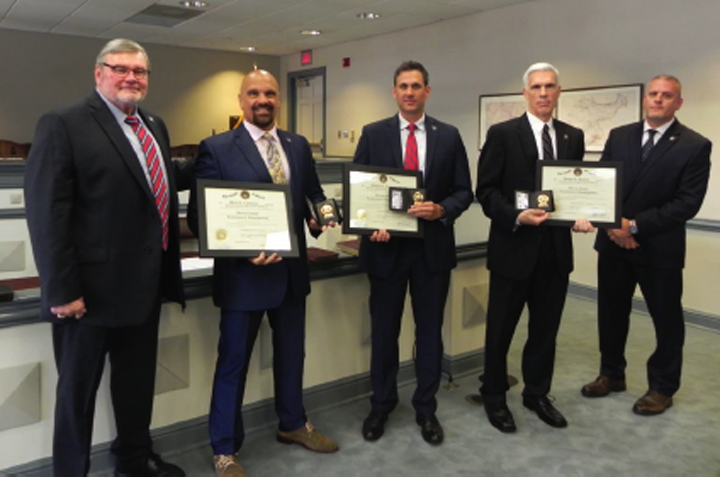
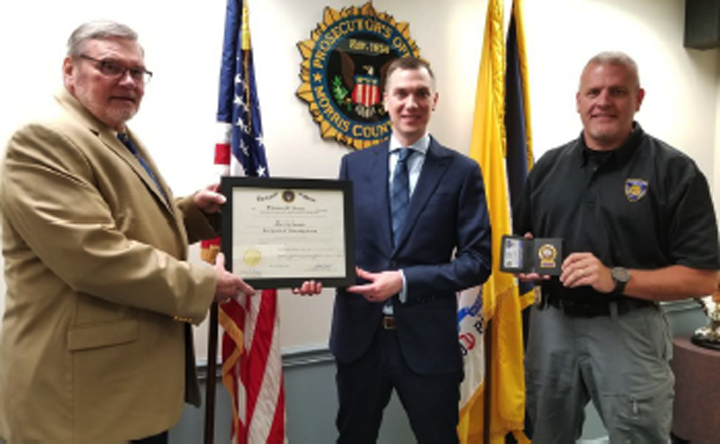
Acting Prosecutor Robert J. Carroll, Lieutenant Mark L. Castellano, Lieutenant Michael L. Gomez, Lieutenant Joseph Soulias, and Chief of Detectives Christoph Kimker
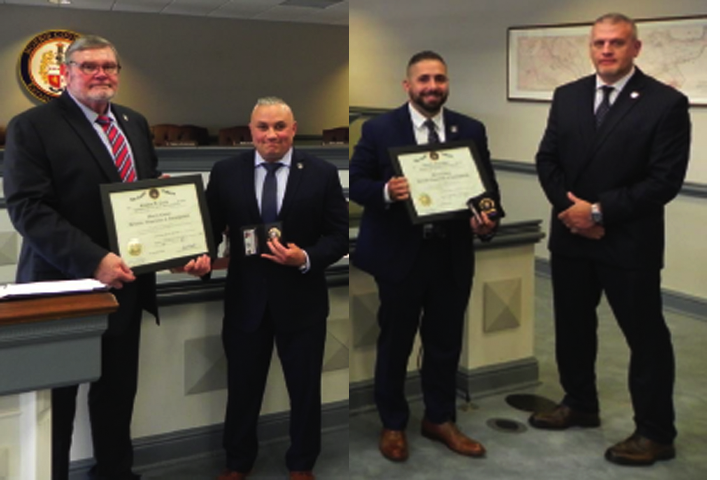
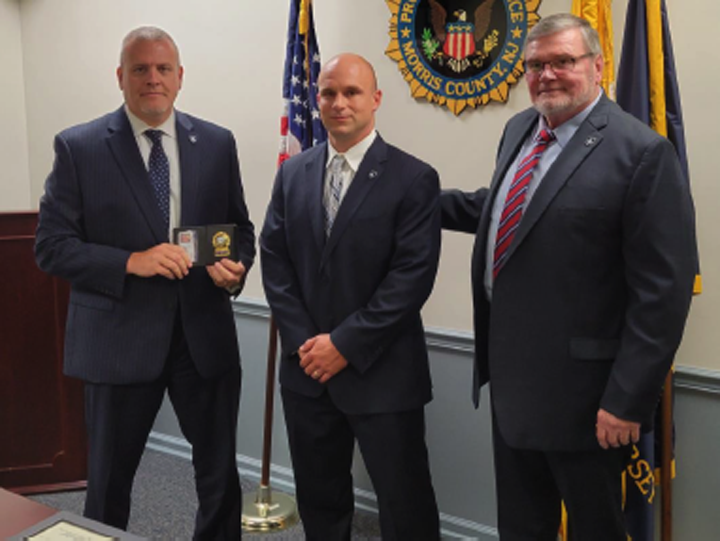
MORRIS COUNTY — Acting Morris County Prosecutor Robert J. Carroll and Chief of Detectives Christoph Kimker announce the promotion of several members of the investigative team within the Morris County Prosecutor’s Office. The following members will be promoted and assigned as indicated:
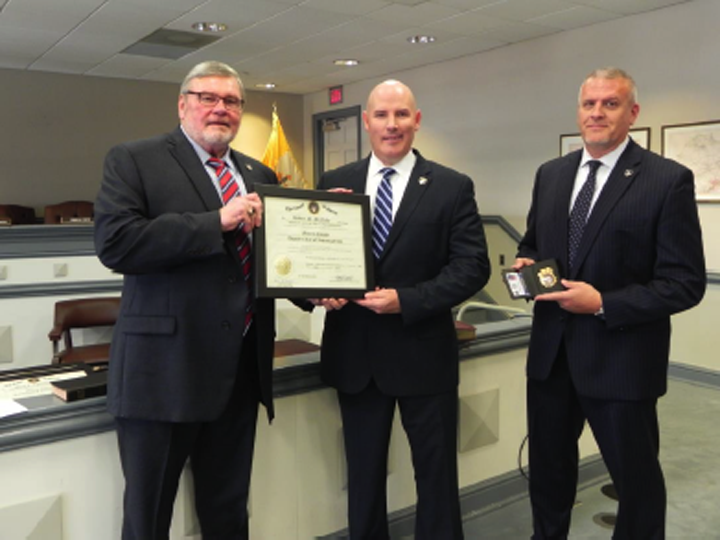
Acting Prosecutor Robert J. Carroll, Deputy Chief Robert McNally, and Chief of Detectives Christoph Kimker
Captain Robert M. McNally will be promoted to the rank of Deputy Chief of Investigations and will oversee the Investigative Division. A graduate of the West Point Command and Leadership Program and a United States Marine Corps veteran, Deputy Chief McNally began his law enforcement career in 1996 with the United States Customs Service. In 2003, he was hired by the Morris County Prosecutor’s Office as a detective and was initially assigned to the Intelligence Unit and the Professional Standards Unit. In 2005, he was re-assigned to the Major Crimes Unit where he worked for approximately the next 12 years, being promoted to sergeant in 2011. After being promoted to lieutenant in 2013, he was transferred to the Specialized Crimes Division, where he oversaw the day-to-day operations of the Professional Standards Unit, Financial Crimes, Missing Persons, Juvenile and Domestic Violence Units. Promoted to captain in 2016, he most recently oversaw the Courts and Administrative Division, which encompasses the General Investigations Unit, the Pre-Trial Services Unit, and the Firearms/Training Unit.
Deputy Chief McNally has earned several recognitions during his law enforcement service, including being honored as “Detective of the Year” by the Morris County Detective’s Association in 2007 for his work on a homicide investigation, and his direct involvement in a federal, one million dollar currency seizure related to narcotics smuggling. He is also a Firearms Instructor, Hostage Crisis Negotiator, a former member of the Tactical Narcotics Team, and a bagpiper with the Morris County Police Pipes and Drums.
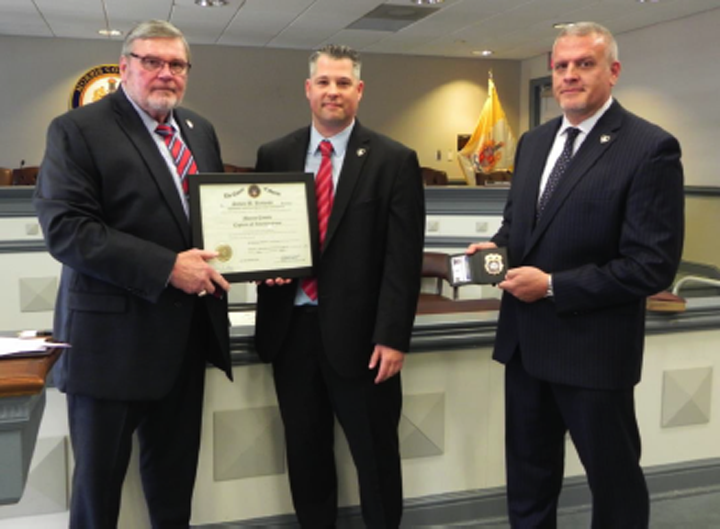
Acting Prosecutor Robert J. Carroll, Captain Steven Brylinski, and Chief of Detectives Christoph Kimker
Lieutenant Steven M. Brylinski will be promoted to the rank of Captain and command the Tactical Division. Captain Brylinski began his law enforcement career with the Investigative Division of the Waterfront Commission of the New York Harbor in 2002, assigned to the Port Newark, New Jersey, field office. He joined the Morris County Prosecutor’s Office in 2005 as a detective assigned to the Professional Standards Unit, the Sex Crimes/ Child Endangerment Unit, the Arson/ Environmental Crimes function within the Major Crimes Unit, and in 2012, was reassigned to the Major Crimes Unit. While assigned to the Major Crimes Unit, Captain Brylinski has earned recognitions from the Morris County Detective’s Association and New Jersey Homicide Investigators Association. Promoted to the rank of sergeant, in 2015, he was transferred to the Sex Crimes/ Child Endangerment, as the unit sergeant, until being promoted to the rank of lieutenant and remaining with the Sex Crimes/ Child Endangerment Unit. In 2019, he was assigned as the lieutenant to supervise the Professional Standards Unit, the Arson/ Environmental Crimes Unit, and the Financial Crimes Unit. Captain Brylinski holds a Bachelor’s degree from St. John’s University and a Master’s degree from Seton Hall University.
Sergeant Mark L. Castellano will be promoted to the rank of Lieutenant and will continue to be assigned to the Firearms, Training, and Humane Law Enforcement units. Having begun his law enforcement career in 1999 with the Hudson County Prosecutor’s Office, Lieutenant Castellano joined the Morris County Prosecutor’s Office in 2002, being assigned to the Special Enforcement Unit. Promoted to detective supervisor in 2006, he was transferred to the Professional Standards Unit. While at this rank, he was assigned to the Intelligence Unit, Community Affairs Unit, Fugitive Unit, Juvenile/Missing Persons Unit, Special Enforcement Unit within the Special Operations Division, Training/Firearms Unit where he was the Training Coordinator and Supervising Firearms Instructor, and General Investigations Unit. In 2018, he was promoted to the rank of detective sergeant, where he assumed the responsibilities of Training Coordinator/Supervising Firearms Instructor, Chief Humane Law Enforcement Officer, Master Resiliency Trainer, and Master Implicit Bias Trainer.
Lieutenant Castellano has been a member of the Tactical Narcotics Team and the Rapid Deployment Team, and he is a Firearms Instructor, Police Training Commission Certified Instructor, Field Training Officer, Accreditation Manager, Defensive Tactics Instructor, North Region Master Resiliency Trainer, ASP Instructor. He has taught at the Morris County Public Safety Training Academy for the last fifteen years.
Sergeant Michael J. Gomez will be promoted to the rank of Lieutenant and will be assigned to supervise the Sex Crimes/Child Endangerment and Megan’s Law units. A United States Army veteran, Lieutenant Gomez started his career in law enforcement as a patrol officer in Randolph Township. He joined the Morris County Prosecutor’s Office in 2013 and was assigned to the General Investigations Unit, and later the Juvenile/Missing Persons Unit, the Sex Crimes/Child Endangerment Unit, and Major Crimes Unit. In 2016, Lieutenant Gomez was promoted to the rank of detective supervisor within the Major Crimes Unit. In 2018, he was promoted to the rank of sergeant within the Intelligence /Homeland Security and High Tech Crimes Units. In 2020, he was transferred back to the Major Crimes Unit in the role of sergeant.
Lieutenant Gomez holds a Bachelor’s Degree in Criminal Justice Administration and a Master’s Degree in Justice Administration and Public Service. He has been awarded multiple Life-Saving awards and other honors, including the Bronze Star Medal by then-Secretary of the Army John McHugh. Lieutenant Gomez still serves in the US Army Reserves and is currently assigned as a Special Agent within the Army’s Criminal Investigation Command.
Sergeant Joseph M. Soulias will be promoted to the rank of Lieutenant and will supervise the Professional Standards, Insurance Fraud/Financial Crimes, and Arson/Environmental Crimes units. Lieutenant Soulias began his law enforcement career in 1986 as a State Trooper with the New Jersey State Police. He was assigned to the Organized Crime Unit, the Official Corruption Unit, detective sergeant of the Missing Persons Unit, detective sergeant first class of the Document Fraud Squad, and the lieutenant of the Missing Persons Unit. In 2013, Lieutenant Soulias joined the Morris County Sheriff’s Office as a detective assigned to Cold Case Homicide Investigations. He joined the Morris County Prosecutor’s Office in 2015, being assigned to the General Investigations Unit and Financial Crimes Unit. In 2017, he was promoted to detective supervisor assigned to supervise the Financial Crimes, Insurance Fraud, Professional Standards and
Arson/Environmental Crimes Unit of the Specialized Crimes Division. He was promoted to detective sergeant in 2018 and assigned to supervise the Financial Crimes, Insurance Fraud, Professional Standards, and Arson/Environmental Crimes Unit of the Specialized Crimes Division.
Lieutenant Soulias holds a Bachelor’s degree from Trenton State College and a Master’s degree from Seton Hall University. He is also a Certified Anti-Money Laundering Specialist and has been a member of the Morris County Crisis Negotiation Team since 2015.
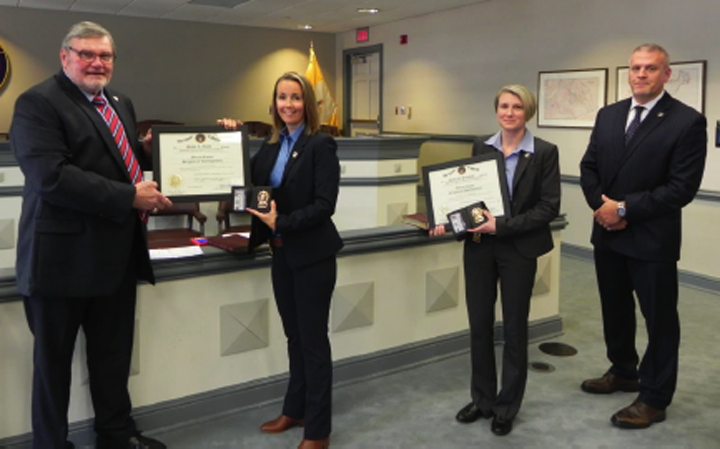
Acting Prosecutor Robert J. Carroll, Sergeant Sasha L. Gould, Sergeant Janine M. Buchalski, and Chief of Detectives Christoph Kimker
Detective Supervisor Janine Buchalski will be promoted to the rank of Sergeant and will be assigned to supervise the Professional Standards, Insurance Fraud/Financial Crimes, and Arson/Environmental Crimes units. Sergeant Buchalski started with the Morris County Prosecutor’s Office as a victim advocate in 2004. In 2008, she was promoted to the rank of detective and during that time, assigned to the General Investigations, On-Call Missing Persons, Domestic Violence, and the Sex Crimes/Child Endangerment Units. In 2012, she joined the Division of Criminal Justice, where she was assigned to the Government Corruption Bureau. In 2015, Sergeant Buchalski joined the New Jersey State Commission of Investigation as a special agent. She returned to the Morris County Prosecutor’s Office in 2017 and was assigned to the Professional Standards Unit, where she was promoted to detective supervisor in 2020. She is the first female Morris County Prosecutor’s Office fire investigator.
Sergeant Buchalski has been recognized by the Morris County Detective’s Association and is a classroom, firearms, defensive tactics, and physical training instructor.
Detective Supervisor Sasha L. Gould will be promoted to the rank of Sergeant and will be assigned to supervise the Major Crimes Unit. Detective Supervisor Gould began her law enforcement career in 2009 with the New Jersey Transit Police Department, where she worked as a police officer, in both a uniform and plain-clothes capacity, and was assigned to a robbery and narcotics task force with the Newark Police Department. In 2013, she joined the Morris County Prosecutor’s Office as a detective. During her tenure with the Morris County Prosecutor’s Office, Sergeant Gould has been assigned to the Professional Standards Unit, Financial Crimes Unit, Bias Crimes Unit, Major Crimes Unit, and Intelligence/Homeland Security Units. Promoted to detective sergeant in 2019, she was assigned to the Major Crimes Unit, Missing Persons, Juvenile Unit, and Domestic Violence Unit.
Sergeant Gould holds a Bachelor’s degree from St. John’s University and has received commendations for her Morris County service.
Acting Prosecutor Robert J. Carroll, Sergeant Thomas M. Joiner, and Chief of Detectives Christoph Kimker
Detective Supervisor Thomas M. Joiner will be promoted to the rank of Sergeant and will be assigned to supervise the Intelligence/Homeland Security units. Starting with the Morris County Prosecutor’s Office as an intern in 2009, Sergeant Joiner was hired as an analyst in 2010 and became an agent. In 2012, he was promoted to detective. Following graduation from the Basic Police Academy, Sergeant Joiner was assigned to the General Investigations Unit before being transferred to the Intelligence Unit, which integrated the Homeland Security Unit. In 2018, he was promoted to detective supervisor and assigned supervision of the Intelligence Unit, the Homeland Security Unit, and the High Tech Crimes Unit. In 2020, he supervised the new Morris County Auto Theft Task Force, created in conjunction with the Morris County Sheriff’s Office and the Morris County Police Chiefs Association.
Sergeant Joiner holds a Master’s degree from Northeastern University and is certified as an expert witness in Electronic Surveillance and Mobile Device Technology. He has served as president of the Morris County Detectives’ Association since 2016 and Quartermaster of the Morris County Rapid Deployment Team since 2015. He is also the County Terrorism Coordinator for Morris County and the Intelligence liaison with both the NJ OHSP and the NJ State Police.
Detective Jimmy W. Atoche will be promoted to the rank of Detective Supervisor and will assist in supervising the Special Enforcement Unit. A United States Army veteran, Detective Supervisor Atoche began his law enforcement career in 2014 with the Morris County Sheriff’s Office, responsible for courthouse security and the personal protection of Superior Court judges and their immediate families. In 2015, Detective Supervisor Atoche joined the Morris County Prosecutor’s Office, where he was assigned to the General Investigations Unit and the Domestic Violence Unit before ultimately being assigned in 2016 to the Special Enforcement Unit. In 2019, Detective Supervisor Atoche was assigned to the Federal Bureau of Investigation’s Transnational Organized Crime and Drug Trafficking Enforcement Task Force.
Detective Supervisor Atoche sits on the Board of Directors for the New Jersey Narcotic Enforcement Officers Association. He has received numerous individual and unit awards and commendations from the NJNEOA and the Special Enforcement Unit. While in Afghanistan, Detective Supervisor Atoche was awarded the Combat Infantry Badge.
Acting Prosecutor Robert J. Carroll, Detective Supervisor Stephen D. Carro, Detective Supervisor Luis D. Goncalves, and Chief of Detectives Christoph Kimker
Detective Stephen D. Carro will be promoted to the rank of Detective Supervisor and will continue to be assigned to the Fugitive Unit. Detective Supervisor Carro embarked on his law enforcement career in 1998 while working at the Juvenile Detention Center. In 1999, he was hired by the Morris County Sheriff’s Office where he worked in Protective Services, Warrants, was a Firearms Instructor, Defensive Tactics Instructor, and was sent on loan multiple times to the Morris County Prosecutor’s Office. He spent 14 years on the Sheriff’s Emergency Response Team, where he was a point man and also a team leader. In 2013, Detective Supervisor Carro joined the Union County Prosecutor’s Office, where he served in the Homicide Task Force, Special Victims Unit, and Firearms Unit. In 2015, Detective Supervisor Carro returned to Morris County Prosecutor’s Office, where he has been assigned to the General Investigations Unit, Major Crimes Unit, Training Coordinator, Firearms Unit, Weapons Return Unit, and currently the Fugitive Unit. Detective Supervisor Carro has held numerous instructor positions and certifications, including being Police Training Commission Certified: MOI Instructor, Firearms Instructor, PT Instructor, and Defensive Tactics Instructor, as well as MEB and PR-24 Instructor.
Detective Luis D. Goncalves will be promoted to the rank of Detective Supervisor and will continue to be assigned to the Arson/Environmental Unit. Detective Supervisor Goncalves began his law enforcement career in 2006 as a police officer with the New York City Police Department, assigned to the 5th Precinct. In 2008, he became a police officer with the Madison Police Department, where he was appointed corporal within the Patrol Division. His duties included serving as a Field Training Officer, an Arson Investigator, a member of the Emergency Services Unit, a member of the Morris County Rapid Deployment Team, a firearms instructor, and was also a past president of the Patrolman Benevolent Association Local 92. He joined the Morris County Prosecutor’s Office in 2017 and was assigned to Pre-Trial Services Unit, General Investigations Unit, Insurance Fraud Unit, and Arson/Environmental Unit. He is also is a member of the Crisis Negotiation Team, a member of the Tactical Narcotics Team, a Firearms Instructor, and a trustee with the Patrolman Benevolent Association Local 327.
Detective Supervisor Goncalves attended college at the Bergen Community College, John Jay College of Criminal Justice, and is continuing his education with Excelsior College. He is a past volunteer firefighter with the North Arlington Fire Department and served on the executive board of the Portuguese American Police Association. He is a Certified Arson Investigator with the New Jersey Division of Fire Safety, a New Jersey Hazmat Technician, and an ATF-trained post-blast investigator. He has received various commendations and recognitions.
Chief of Detectives Christoph Kimker, Keith J. Franco, and Acting Morris County Prosecutor Robert J. Carroll
In addition to the promotions, Keith J. Franco was sworn in as a Morris County Prosecutor’s Office Detective and will be assigned to the Professional Standards Unit. Prior to joining the Morris County Prosecutor’s Office, Detective Franco served as a detective in the New Jersey Division of Criminal Justice, a member of the Organized Crime/Gangs Bureau and Office of the Insurance Fraud Prosecutor. He has also held positions as a disability claims manager and project controller in the private sector. Detective Franco holds a Bachelor’s degree from the College of New Jersey, a Master’s degree from Stevens Institute of Technology, and has completed various professional training courses. Formal ceremonies were held on June 14 and June 15, 2021. Acting Prosecutor Carroll said, “We all know that law enforcement is a challenging career. These promotions elevate each promotee to a position of higher trust and sensitivity and reflect our confidence that they will meet and exceed the high standards demanded in professional policing today. The Morris County Prosecutor’s Office is fortunate enough to have such dedicated and skilled law enforcement professionals, and am I proud to initiate these well-earned promotions to individuals who have demonstrated leadership and distinguished performance.”
MOUNTAIN LAKES — The Borough of Mountain Lakes is seeking interested high school students to serve on several of the Borough’s committees and commissions starting in September 2021. This is a unique opportunity for students with an interest in participating in local government and serving their community.
Scope of the Role: Student Members will be appointed for a one year term beginning in September 2021 and will participate in committee meetings, contribute to committee work, and serve as a liaison with the Mountain Lakes schools.
The time commitment will be approximately 4-6 hours per month. Students will serve on one of the following committees:
❖ The Environmental Commission: meets the 3rd Tuesday of every month at 7:30 PM
❖ The Historic Preservation Committee: meets one Tuesday every month at 7:30 PM
❖ The Lakes Management Advisory Committee: meets the 1st Tuesday of the month at 7:30 PM
❖ The Shade Tree Commission: meets the 2nd Wednesday of the month at 7:30 PM
❖ The Woodlands Advisory Committee: meets the 3rd Wednesday of the month at 7:30 PM
Additional information about each Committee and Commission is included on the Borough website by clicking here on the “Committees” tab.
Qualifications: This opportunity is open to any high school student either attending Mountain Lakes High School or residing in Mountain Lakes. Student applicants should have a strong interest in serving the community and in learning more about the work of their selected committee (e.g. historic preservation, the environment, sustainability), be able to attend committee meetings and complete committee work, and be in good standing with their high school. Application Process: Interested students should complete the attached brief application and submit it via email to the Borough Clerk, [email protected] by June 30.
EAST HANOVER — East Hanover needs Summer Playground Counselors, ages 15 years of age and older. Needed from June 28 to August 6 working from 8:30 a.m. to 1:30 p.m.; $12.00 per hour or $13.00 with CPR/First Aid. Please email Linda if interested: [email protected]
MOUNTAIN LAKES — Kelsey Zappa Thompson has been named to the Wofford College Dean’s List for the 2021 spring semester.
To be named to the Dean’s List, a student must be enrolled for at least 12 semester hours of graded courses and attain a semester grade point average of 3.6 or higher.
Wofford College, established in 1854, is a four-year, residential liberal arts college located in Spartanburg, South Carolina. It offers 27 major fields of study to a student body of more than 1,700 undergraduates. Nationally known for the strength of its academic program, outstanding faculty, study abroad participation and successful graduates, Wofford is home to one of the nation’s 290 Phi Beta Kappa chapters. The college community enjoys Greek life as well as 19 NCAA Division I athletics teams.
MORRIS COUNTY — Bills signed into law without public testimony and meeting notifications without an agenda are pushing one GOP lawmaker to legislate good governance.
“I refuse to let public officials silence the people of New Jersey,” Assemblywoman Aura Dunn said. “Transparency in government is essential to maintaining public trust.”
Dunn currently sponsors a constitutional amendment (ACR144) to require every bill and joint resolution introduced in the Legislature to be heard in committee and is introducing a bill requiring municipal governments to post agendas prior to public meetings.
“We are a government of the people, not over the people,” Dunn (R-Morris) said. “At the very least, advocates and community members should be given an opportunity to voice their concerns, support, and opinions. That is impossible to do when people don’t know what will be discussed at a meeting or meetings are canceled altogether.”
Dunn says the secrecy at the statehouse during the pandemic has been of particular concern. Gov. Phil Murphy and the Democrat majority in Trenton have faced criticism from Republicans and the public for their lack of transparency during the Covid-19 public health emergency.
“From refusing to comply with public records requests to rushing legislation that allows Murphy to maintain many of his executive pandemic powers, the majority party has essentially closed the door on bipartisanship and public input,” Dunn said. “The majority party has kept the majority of New Jersey in the dark for far too long. It’s time we bring more than one party to the table.”
Dunn also noted that Boards of Education are currently only required to alert the public of the location, date, and time of a meeting. Dunn said she is drafting a bill requiring that local governments follow the same announcement rules as the legislature to make sure the public has the opportunity to attend and speak during the public portion.
“Parents have a right to speak to the issues that affect their child’s education,” Dunn explained.
“Both of my bills come back to good governance. It should be a shared experience. Not a one-sided show.”
Out of the approximately 100 bills being considered by Senate and Assembly committees Wednesday, only seven are sponsored by Republicans.
MORRIS COUNTY — Greater financial transparency is needed to lower Medicaid costs for taxpayers and prescription drug prices for beneficiaries says Assemblywoman BettyLou DeCroce.
A bill she sponsors requiring pharmacy benefit managers working within the Medicaid program to disclose certain financial information to the N.J. Department of Human Services was cleared by an Assembly committee Monday.
Under the bill (A1259/S249), a pharmacy benefits manager providing services within the Medicaid program would be required to disclose all sources and amounts of income, payments, and financial benefits received on behalf of a managed care organization (also known as a health plan), ingredient costs and dispensing fees or similar payments made to pharmacies, and administrative fees.
“By properly monitoring pharmacy benefit managers’ profits, their payment models and use of spread pricing, New Jersey will be better equipped to put a stop to practices that are costing taxpayers and Medicaid beneficiaries,” DeCroce (R-Morris) said.
Spread pricing occurs when pharmacy benefit managers keep a portion of the amount paid to them by the health plans for prescription drugs instead of passing the full payments on to pharmacies. Studies in other states have estimated that prohibiting spread pricing could save Medicaid programs up to $43 million annually.
“Everyone is negatively affected as the prices of prescription drugs rise. For our lower-income residents who forgo important medications to pay the bills to our taxpayers who are suffering under increased state spending, it’s time we reign in these runaway costs,” DeCroce said.
Data from the Centers for Medicare and Medicaid Services show that from 2013 to 2017, average state and federal Medicaid spending on prescription drugs increased by more than 14.8% annually. Average Medicaid prescription drug spending as a percentage of state budgets has increased by more than 89% over the past 10 years.
The bill passed the Senate unanimously in February 2020.
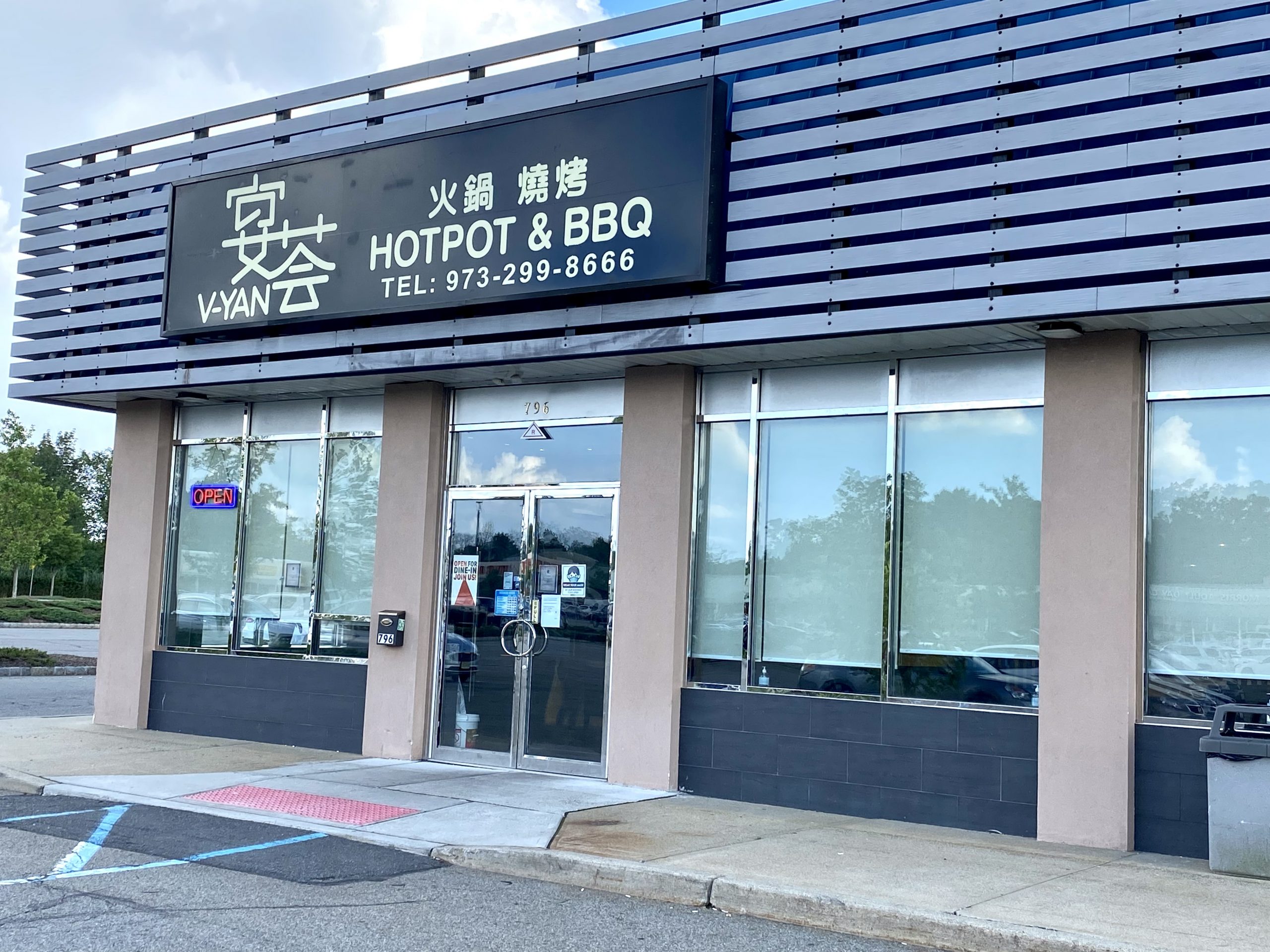
V-Yan Hot Pot & BBQ, 796 Route 46, Parsippany; Located in Arlington Plaza; (973) 299-8666. www.vhotpot.com
It was a truly fun and entertaining learning experience deciding on how long to cook and prepare our chosen items
PARSIPPANY — If you were a Mongolian horseman 800-900 years ago, under the tutelage of Genghis Khan, cold, and hungry, you probably used your ornate iron and leather hardened helmet as a vessel to simmer some broth over an open fire, then threw in some chunks of meat, probably mutton or horse, to get fortified so you were ready to attack your next village. The origins of Hot Pot can be traced back to those roots and have since subsequently spread throughout China. In fact, if you happen to be walking down a street in some cities in China, or throughout Asia, you may find Hot Pot eateries as popular as our own fast-food burger joints.
Key Lin, Patrick Minutillo and Car Sun Lin
In the summer of 2016, Parsippany became the home to just such an eatery, offering Asian fusion cuisine with the opening of the V-YAN Hot Pot & BBQ, located in the Arlington Plaza right off Route 46 Westbound. V-Yan translates to “a party” according to our server. Some may remember that location as the old Blockbuster store. Although Hot Pot has its origins in China, the BBQ this restaurant offers refers to the popular Korean cuisine method of grilling meats, fish, chicken, pork, etc. at the dining table itself. I would guess the Korean barbecue (gogi-gui) origin story goes back as far as Hot Pot’s and is assuredly just as interesting, but it really only became popular in its current style, complete with plenty of Western influences, since the 1980s. If you are unfamiliar with Korean BBQ, it is quite dissimilar from the low and slow style of American BBQ you may be used to. Instead of large cuts of meat, like brisket and ribs, which are slowly smoked, Korean BBQ is centered around pieces of various meats and chicken that are skewered and grilled.
Since Hot Pot, sometimes called Steamboat, is a social, communal, interactive feast that is best experienced with friends and family, I invited a couple of foodie friends to join me for my first visit to this kind of cuisine, and I was looking forward to this new dining experience. And, although hot pot, steaming cuisine is traditionally enjoyed during the coldest months of winter, we chose to time our visit while in the middle of a summer heatwave. As it turns out, it did not matter, the restaurant was comfortably air-conditioned and we had a great time.
The interior was impressive, laid out thoughtfully with black counter comfortably separated tables, bright calming colors throughout, clusters of bright overhead hanging lamps, and soft acoustic music playing in the background
When you arrive, you are met with a very architecturally appealing, glass-front building, standing apart in the Arlington Plaza, and on entering you encounter a surprisingly spacious, modern, bright, and upscale vibe. A cordial, Key Lin, who was working the front counter, was immediately welcoming and ensured our group was immediately led to our table. The interior was impressive, laid out thoughtfully with black counter comfortably separated tables, bright calming colors throughout, clusters of bright overhead hanging lamps, and soft acoustic music playing in the background. There are also dining sections set apart along the sides of the dining room that appeared to be a little more private and perfect for a more intimate get-together. The ambiance was very cool, relaxed, comfortable, and casual.
Jenny bringing out a cart with all of the food items ordered
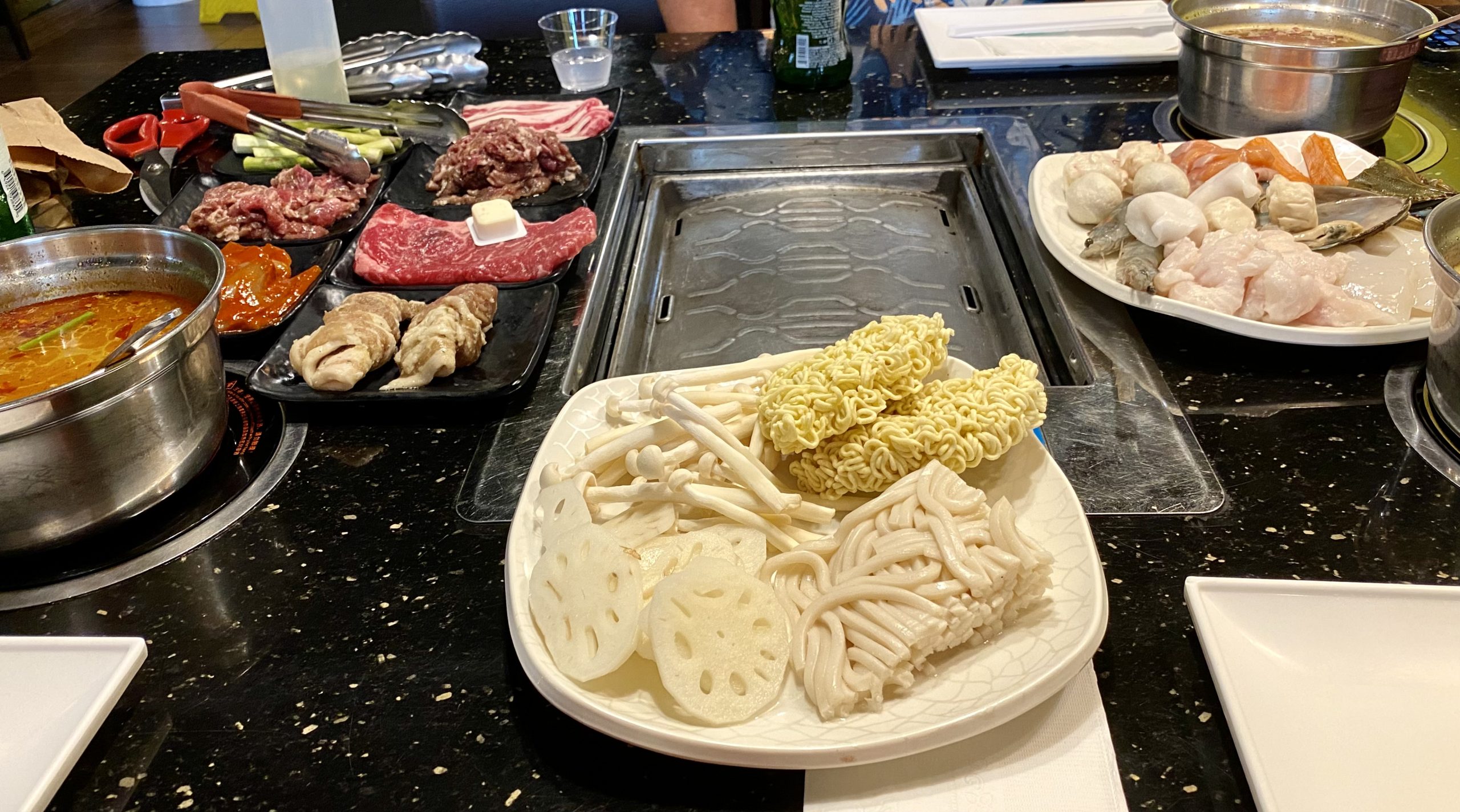
The tables are set up with individual heaters, that can be set from low to surprisingly high, for each diner to boil their own chosen Hot Pot broth (there is a variety of broths to choose from) as they like, and in the center of the table is a grill for the group to cook the BBQ. After a very brief training session from our helpful, patient, friendly, and attentive server, Jenny, we had it down like experts. LOL. As advertised, it was a hugely enjoyable, social get-together, where everyone at the table participated in the preparation of the food that we shared which included a large array of meats, fish, and vegetables that were there for our choosing.
Pat wastes no time in preparing a delicious dish
You can order individually either the Hot Pot or the BBQ, or you can order a combination of both, which I did on my visit. The combo dinner is $32.99 per person, but in my opinion, was well worth it considering the variety and a large amount of food that you can order. Did I mention you can order an unlimited amount of food and it is also a BYOB?
I made sure to bring along some Lucky Buddha beer, while my friend found a traditional Korean wine. Make note, your table must match the option picked by everyone in your group, but you can individually choose from a variety of soup bases. As usual, I went with the hot and spicy. Since the food is brought out for the entire table to share this policy does make sense.
Assorted seafood selections
There are literally multiple pages of mouthwatering food options to choose from, some for your now boiling hot pot soup base and others for barbecuing. My group was not hesitant to choose an ample amount of premium beef, lamb, pork, pork belly, sliced chicken, shrimp, squid, calamari, fish fillet, clam, crab meat sticks, mussels, oysters, dumplings, lobster ball, and Fuzhou Fish Balls, just to start. And do not forget the Udon and assorted other noodles to thicken your personalized hot pot broth. Nope, we were not shy about ordering, and reordering and our attentive servers continued to bring it out as quickly as we ordered it. It was a truly fun and entertaining learning experience deciding on how long to cook and prepare our chosen items. You will find that this cooking interaction is a big part of what really enhances this lively dining experience. Note: the cooking time is very quick in both the hot pot and on the grill, but you will figure it out very quickly.
The cooking interaction is a big part of what really enhances this lively dining experience
I found this a great venue to visit, and certainly enjoyed the entire dining experience. I was previously unfamiliar with Hot Pot, but it only took minutes to get comfortable and feel right at home, and the servers are more than willing to help guide you along with any questions or cooking suggestions. All the assorted meats, fish, chicken, and veggies were fresh, tasty, and of high quality.
Self-serve sauce bar
There is also a self-serve sauce bar available in the rear of the restaurant complete with a large variety of sauces, marinades, and herbs that you can mix and match to enhance your meal as you like. I found the hot chili sauce, along with some scallions, an excellent dipping selection. And, for a perfect ending to this feast, do not forget to serve yourself some cool, smooth, and delicious ice cream for dessert. It is included in the price and there is a large selection of flavors to choose from, and you can have all you want. Personally, I liked the pistachio. That is if you can still eat any more at that point. One of my guests could not.
Pistachio Ice Cream
If you have not yet tried this type of cuisine, I would recommend getting together with a friend or two, a group, your family, and giving it a try. Do not be hesitant to try something new. I think you will suddenly become a fan and will want to add this cuisine to your future outings. The food is flavorful and delicious, it is reasonably priced, and it is a lot of fun preparing your dinner together. Great for a family get-together, the kids will love it. Do not know what took me so long to get here!
As always, please continue to support all our local businesses and restaurants. 火鍋 고기구이
Large Parking Lot, BYOB, Dine-In, No Delivery, Vegan Options; Reservations for Large Groups
V-Yan Hot Pot & BBQ, 796 Route 46, Parsippany; Located in Arlington Plaza; (973) 299-8666. www.vhotpot.com
MORRIS COUNTY — The Morris County Board of County Commissioners adopted a resolution last night proclaiming June 2021 Pride Month that recognizes vital contributions made to the nation and county by LGBTQ+ individuals and encourages the inclusion of all people in our society.
Resolution 472 was adopted unanimously by the board at their public meeting.
“We wish to celebrate and encourage diversity, acceptance, and inclusion within our community, and we include the LGBTQ+ community by proclaiming June as Pride Month. Equality, respect, and inclusion are for everyone, and it is an attainable goal,” said Commissioner Kathryn DeFillippo, the board liaison to Human Services planning.
“But the need for education and awareness is vital to end discrimination, bias and prejudice — and specifically this resolution tonight is for the LGBTQ+ community. So we ask our Morris County community to embrace these principles, and together foster a warm and hospitable place for all, irrespective of one’s sexual orientation or gender identity,” she added.
The proclamation is included below:
Pride Month 2021 Resolution
Adopted June 9, 2021
Morris County Board of County Commissioners
Whereas, the Morris County Board of County Commissioners recognizes that the pursuit of equality, respect and inclusion for all individuals is an attainable goal; and
Whereas, all human beings should be equal in dignity and rights, and no one should live in fear or face persecution and violence due to their sexual orientation or gender identity; and
Whereas,the County of Morris celebrates and encourages diversity, acceptance and inclusion within our community and supports the self-affirmation, equality and increased visibility of lesbian, gay, bisexual and transgender people; and
Whereas, LGBTQ+ individuals have made and continue to make vital contributions to our county and nation, including cultural, scientific, political, civic, educational, economic, and in many other areas; and
Whereas, it is essential to acknowledge that the need for education and awareness remains vital to end discrimination, biases, and prejudice; and
Whereas, the County of Morris calls upon residents of our community to embrace this principle and work together to foster a warm and hospitable place for all to live; and
Whereas, celebrating Pride Month influences awareness and provides support and advocacy for Morris County’s LGBTQ+ community, and fosters dialogue to build understanding and acceptance and advance equal rights for all Morris County residents.
Now, Therefore, Be It Resolved, by the Morris County Board of County Commissioners, in the State of New Jersey, that June 2021 be proclaimed Lesbian, Gay, Bisexual, Transgender, Queer/Questioning, and Plus (LGBTQ+) Pride Month in Morris County and that our residents continue to respect all fellow human beings, irrespective of their sexual orientation or gender identity.