

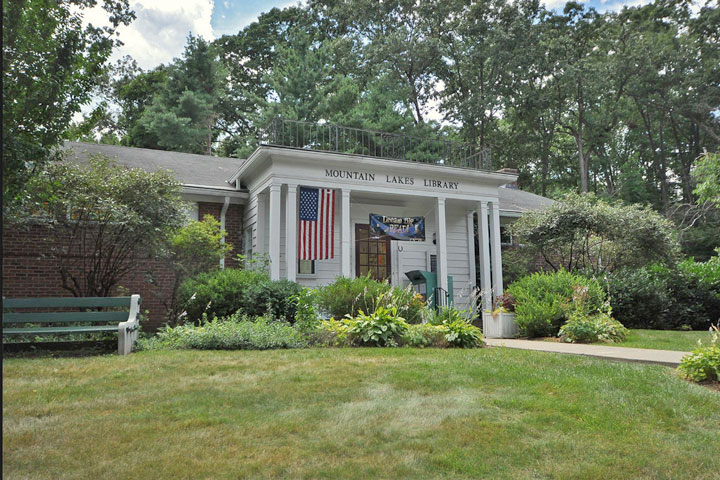

MOUNTAIN LAKES — When most people think of Braille generators, they picture specialized equipment and high costs. However, a free web app developed at the Mountain Lakes Public Library Makerspace is changing that picture, one 3D-printed label at a time.
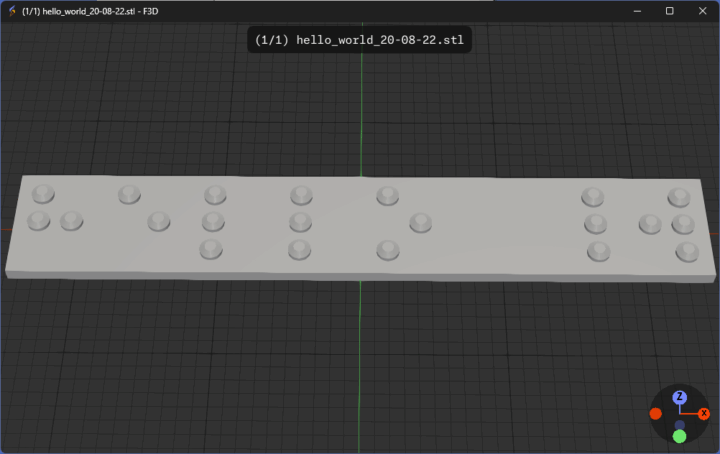
BrailleGen, developed by the Mountain Lakes Public Library Makerspace, is a free application that translates typed text into 3D-printable Braille. Whether a user enters a single word, a short phrase, or a full paragraph, the app converts it into a file ready to be prepared for 3D printing.
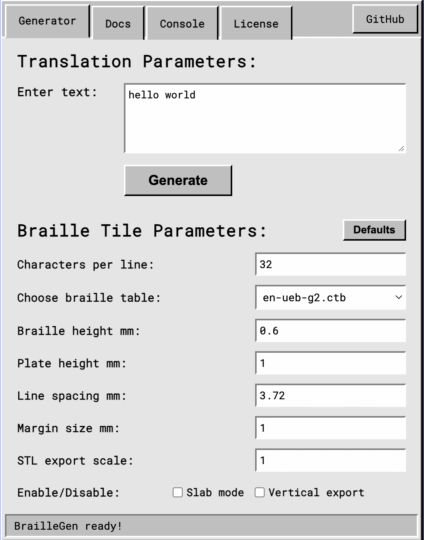
The software relies on Liblouis, a trusted open-source translation library, to support not only English in both uncontracted and contracted forms, but dozens of other languages as well. OpenCASCADE provides the 3D geometric modeling capabilities that enable BrailleGen to generate and export the final 3D-printable files.
The concept is simple, but the implications are significant. With an estimated one million 3D printers currently in use in libraries, schools, and homes across the United States, BrailleGen turns an otherwise costly and time-consuming process into something that nearly anyone can do in minutes. A parent, a teacher, a librarian, or a kid with access to a 3D printer can now create accurate, functional Braille labels, signs, and tactile resources without any specialized training or expensive equipment.
The app includes practical features designed with real-world use in mind. A “slab” mode adds an orientation notch to the top right of each label, helping users identify the correct reading direction by touch. The interface is also screen reader compatible, ensuring that the tool itself is accessible to blind and low-vision users.
BrailleGen is part of a broader mission by the Mountain Lakes Public Library Makerspace, which has been developing universally designed resources in collaboration with the blind and low-vision community for several years. The Makerspace has partnered with organizations including Clovernook Center for the Blind & Visually Impaired and St. Joseph’s School for the Blind, among others, to create tools that are useful and inclusive from the ground up.
BrailleGen is built on the mission that access to Braille should not depend on wealth, geography, or circumstance and instead should be accessible to everyone. As the Makerspace writes, their goal is to “democratize Braille” and make it possible for any community to create the resources they need.
Access BrailleGen through this link. More information about the app and the Makerspace’s broader Braille Forward initiative can be found on their Substack platform.