

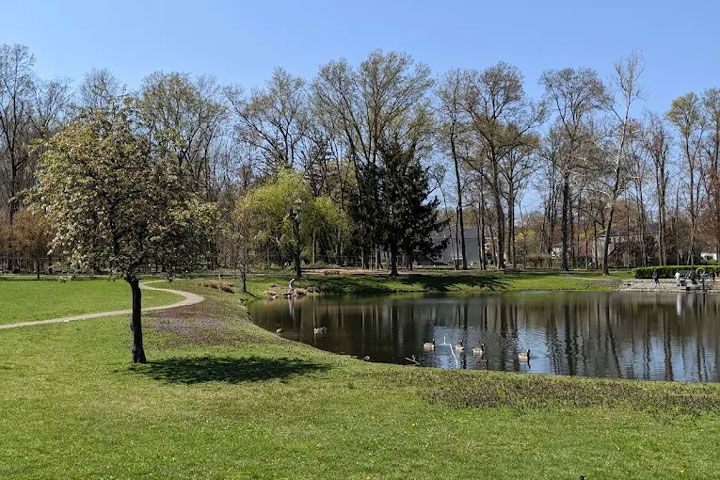


HANOVER — Members of the Hanover Township Green Team and the Whippany River Watershed Action Committee (WRWAC) gathered at Lower Malapardis Park on Wednesday, June 25 to showcase the trees they have planted as part of their ongoing efforts to protect the Whippany River Watershed.
In recognition of the township’s ongoing environmental initiatives and in appreciation of the Department of Public Works, WRWAC presented Hanover Township with a $2,300 donation. The funds, which were raised through corporate contributions from Barclays, Morristown Municipal Airport, and the law firm of Maraziti Falcon, LLP, will support continued tree plantings and garden cleanups throughout local parks.
“It is our way of saying thank you in the hopes that the donated money will help pay for the trees to make the watershed better,” said WRWAC Facilitator and Administrator Jennifer O’Neill.
WRWAC’s mission is to preserve the health of the watershed through community partnerships and stewardship efforts. The organization has collaborated with Hanover Township and local businesses to clean riverbanks and restore green spaces by planting native trees.
Earlier this year, approximately 30 members of the organization Save the Earth, from A to Z, We Are One Family, teamed up with the township’s Parks and Recreation Department at Stoney Brook Community Garden to remove weeds and debris and prepare the area for this year’s growing season.
Why Tree Planting Matters
“Planting trees is critical for protecting the environment,” said Hanover Township Arborist Rich Wolowicz. “They filter pollutants from the air, prevent erosion, and regulate water flow.”
Wolowicz noted the township has suffered tree loss due to the Emerald Ash Borer, an invasive insect that targets ash trees. To address this, WRWAC began Phase One of its reforestation effort by planting six trees in Central Park off Eden Lane. The previous year, 12 trees were planted, and plans are underway to plant more in Black Brook Park next spring.
Among the species planted are Swamp White Oaks, Black Gum, Dogwood, and Silverbells—all 2.5-inch caliper trees that have already seen significant growth.
Sustaining Tree Initiatives
Funding for tree planting often comes from a township’s Open Space Fund, financed by a voter-approved tax. Hanover’s Land Use and Development Code (Chapter 166) further supports this initiative by regulating tree removal and mandating replacements based on the diameter of the trees taken down.
The code requires developers to replace trees according to a formula based on “diameter at breast height” (DBH). If the number of required replacement trees cannot be supported on-site, a developer must either pay $400 per tree or plant trees at an approved off-site location.
The Broader Impact
Larry Gindoff, WRWAC Vice Chair, emphasized that development poses a threat to green space through increased impervious surfaces and poor stormwater management.
“You don’t have to be on the river to impact the river,” said Gindoff. “Runoff from anywhere in the watershed can ultimately reach the Whippany River.”
Tree roots play a vital role in absorbing stormwater, reducing flooding, and filtering out pollutants, he explained. “When we protect the river, we protect the whole ecosystem.”
Through continued collaboration and support from both the public and private sectors, Hanover Township and WRWAC are working to ensure the long-term health and sustainability of the Whippany River Watershed and its surrounding environment.
Ask ChatGPT