


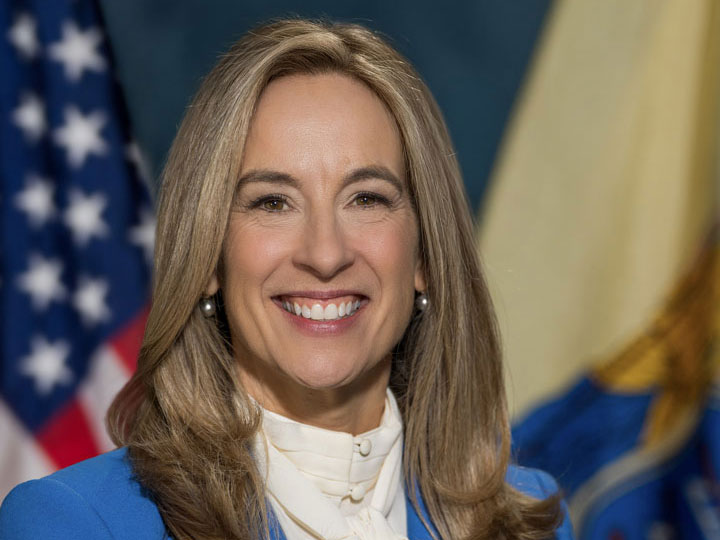


MORRIS COUNTY — Governor Mikie Sherrill signed legislation requiring data centers to disclose their water and energy use during an event Thursday morning at the South Brunswick Public Library auditorium, completing a four-part data center plan she first outlined in May.
The event, framed around a theme of giving power back to communities, brought the statewide debate over rapidly expanding data center development directly to South Brunswick, a township where the issue is not theoretical. Mayor Charlie Carley said during the event that two data centers have operated in the township for decades, while a newer data center development reflects the changing landscape facing municipalities across the state.
“Decisions about the future of our communities should be made here, not in boardrooms or backrooms in Silicon Valley,” Sherrill said. “We don’t have to choose between innovation and accountability, and we won’t.”
Four Guardrails Now in Place
Sherrill first announced the state’s data center strategy on May 27, describing four priorities: requiring data centers to pay their fair share of energy and infrastructure costs, increasing transparency, helping municipalities secure community benefits, and creating good-paying jobs. Two of those priorities have now been enacted through legislation.
The first, the Data Center Fair Share law, was signed July 7. It establishes a separate electricity rate structure for large data centers so that residential and other utility customers are not left subsidizing the power and grid infrastructure needed to serve them. Utilities must develop rules assigning data-center-related costs directly to those customers, with financial protections in place in case a project ultimately uses less electricity than expected.
The second measure, signed Thursday, requires data center owners and operators in New Jersey to report their water and energy usage to the state Board of Public Utilities every six months. The reports must detail total energy consumption, electricity used by information technology equipment, on-site power supplies, total water use, and where that water comes from. The reporting requirement runs for three years initially, after which the board can decide whether to make it permanent.
Sherrill said residents deserve that information before large developments move forward. Senate Majority Leader Teresa Ruiz, a sponsor of the legislation, said municipalities have too often had to evaluate major projects using information supplied mainly by the developers themselves. Assemblyman Michael Venezia, an Assembly sponsor, said the consistent reporting will give state and local government a clearer picture of the industry’s demands.
Community Benefits and Labor Standards
The third piece of the plan centers on Community Benefits Agreements, which allow municipalities to negotiate legally binding terms with developers to address local impacts and secure benefits for their communities. Rather than new legislation, the state implemented this piece through guidance from the Department of Community Affairs and a new Data Center Municipal Resource Hub launched by the New Jersey Economic Development Authority, which offers municipalities technical assistance on grid and interconnection filings, water use projections, tax impact estimates, and benefits agreement terms.
The fourth priority addresses labor standards. The administration has issued guidance calling for prevailing wages on qualifying data center construction projects and encouraging project labor agreements on larger developments.
No Statewide Moratorium
Much of the question-and-answer portion of the event focused on whether New Jersey should go further and pause large data center development statewide, an approach New York has taken with a one-year moratorium on certain projects. Sherrill rejected that idea, saying municipalities already have the authority to make their own decisions and, if they choose, impose their own local restrictions. She said some towns with large industrial areas may see data centers as a good fit, while others may not.
Sherrill said there is no single statewide threshold for acceptable water or electricity use, since conditions vary by community, and that those questions need to be worked out during project review and negotiation, followed by state oversight to ensure developers follow through on their commitments.
Allison McLeod, interim executive director of the New Jersey League of Conservation Voters, said transparency is essential for officials to understand the industry’s effect on electricity, water, and the environment, and that families and small businesses should not have to absorb higher energy costs created by some of the world’s largest electricity consumers.