
Thursday, October 22, 2026
Home Blog Page 643

Murphy Signs Legislation to Establish State-Based Health Exchange

0

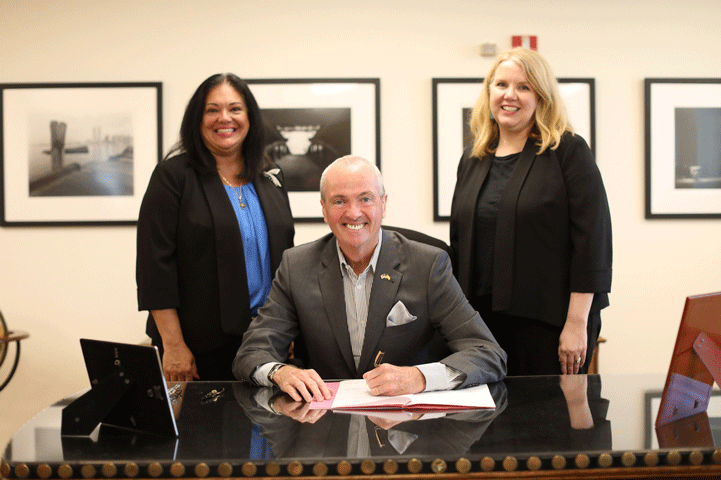
TRENTON – Acting to improve health care access for New Jersey residents, Governor Phil Murphy today signed legislation to establish a State-Based Health Exchange in New Jersey. The law will allow New Jersey greater control over its health insurance market and the ability to establish stronger protections against the Trump Administration’s sabotage of the Affordable Care Act.

“New Jersey has advanced strong policies to protect access to health care for our residents, access which I believe is a human right. With this law, we take another step in securing the access families need to gaining more affordable health coverage. Creating our own exchange will allow us to take actions that protect residents in our state, and will ensure we are in the best position in New Jersey to defend against the Trump Administration’s assault on the Affordable Care Act,” said Governor Phil Murphy. “I want to thank the many tireless advocates that helped get this legislation over the finish line. This bill makes it so that New Jersey can continue its work to ensure that all residents have access to the coverage and care they deserve.”

Currently, New Jersey uses the federal exchange, or Marketplace, which provides a platform for consumers to shop for and enroll in coverage. Transitioning to a State-Based Exchange (SBE) will give the state more control over the open enrollment period; access to data that can be used to better regulate the market, conduct targeted outreach and inform policy decisions; and allow user fees to fund exchange operations, consumer assistance, outreach and advertising. By redirecting the assessment on premiums, currently paid to the federal government to utilize a Federally Facilitated Exchange (FFE), New Jersey can operate an exchange that is tailored and efficient for New Jersey residents.

To fund the operation of the SBE, the law will transfer the current federal exchange user fee, which is presently set at 3.5% of premiums, to a 3.5% State-Based Exchange user fee – a rate that currently generates over $50 million a year. The transfer of the user fee to New Jersey will allow the state to dedicate funding towards outreach and enrollment efforts, which have been reduced at the federal level, as it transitions to an SBE for 2021.

“Establishing a State-Based Exchange is critical to improving access to coverage for New Jersey families. The federal government has cut the enrollment period, and slashed funding for outreach, advertising and navigators that provide critical assistance to residents in our communities,” said Department of Banking and Insurance Commissioner Marlene Caride. “Funding sent to Washington to utilize the federal exchange will be better utilized right here in New Jersey, where we can establish policies that create greater stability, access and improved protections for residents. This is a milestone for our state, and I am proud to be part of an administration that is taking on the issues that are so important to the lives of our residents.”

“As someone whose life’s work has focused on getting people affordable, quality health care coverage, I am delighted to be part of an Administration that is leading in the way in protecting the Affordable Care Act and that the Governor and Legislature have worked together to protect affordable coverage in our state,” said New Jersey Department of Human Services Commissioner Carole Johnson, who worked on the Affordable Care Act as a senior health policy advisor in the Obama White House. “This is an important day for hard-working New Jerseyans. Governor Murphy is once again standing up for the health care needs of us all.”

“Establishing a state exchange and a single door application portal will streamline the process and work seamlessly for thousands of New Jerseyans,” said Senator Vitale, chair of the Senate Health, Human Services, and Senior Citizens Committee.

“New Jersey’s total Medicaid enrollment increased by 36 percent—nearly 460,000 people—in a little less than four years under the Affordable Care Act. To protect these residents and other who need access to affordable healthcare we must take action to stabilize New Jersey’s market,” said Assemblyman Conaway. “This will help ensure every resident has access to affordable healthcare for themselves and their families.”

“Preserving affordability and access residents have come to benefit from under the Affordable Care Act will require these next steps,” said Assemblyman McKeon. “By doing this, we protect New Jersey families from any erroneous changes the Trump administration continues to make to the federal program. Healthcare and access to it should remain a right and not just privy those who can afford it.”

“New Jersey had to take swift action to protect healthcare access under the Affordable Care Act,” said Assemblywoman Pinkin. “We can protect New Jersey families from any ill-advised changes to the successful federal program. A state-based exchange and a coordinated outreach program are key components to fighting against the discriminatory changes prohibiting residents with preexisting conditions and limiting women’s access to contraceptives.”

“We applaud the Governor for taking quick action and are excited that New Jersey health care consumers will be protected and have a more seamless and accessible enrolment process,” said Maura Collinsgru, Healthcare Programs Director at New Jersey Citizen Action. “Both NJ Citizen Action and our NJ For Healthcare partners look forward to working with the Governor and the State to ensure the exchanges success.”

“With the creation of a state exchange, New Jersey is cementing itself as a national leader in keeping health coverage affordable,” said Ray Castro of NJ Policy Perspective. “A state exchange will allow New Jersey to cover more residents, reduce premiums, and qualify for more federal funds. This is a huge victory for the thousands of uninsured New Jerseyans and those who are struggling to afford their health insurance. States across the country should look to New Jersey as an example of how to ensure quality, affordable health coverage, regardless of what the Trump administration does to undermine the Affordable Care Act.”

The law provides that the Department of Banking and Insurance shall coordinate the operations of the exchange with the operations of the State Medicaid program and the NJ FamilyCare Program to determine eligibility for the programs as soon as practicable. The Commissioner of Human Services, in consultation with the Commissioner of the Department of Banking and Insurance, shall submit a proposal for available federal financial participation funds to CMS for the Medicaid eligibility platform and the exchange to be integrated.

Under the law, the Commissioner of Banking and Insurance shall establish an advisory committee to provide advice to the commissioner concerning the operation of the exchange. The advisory committee shall include at least nine members, as follows:
(1) The Commissioner of Banking and Insurance, or a designee, who shall serve ex-officio; (2) The Commissioner of Human Services, or a designee, who shall serve ex-officio;
(3) the Commissioner of Health, or a designee, who shall serve ex-officio; and
(4) six public members, who shall be residents of the State, appointed by the Commissioner of Banking and Insurance. Each public member shall have demonstrated experience in one or more of the following areas: health insurance consumer advocacy; individual health insurance coverage; small employer health insurance coverage; health benefits plan marketing; the provision of health care services; or academic or professional research relating to health insurance.

The Governor signed a Letter of Declaration in March notifying the Centers for Medicare and Medicaid Services of New Jersey’s intent to create a State-Based Exchange for 2021. The letter may be found here.

Primary sponsors of the legislation (A5499) include Assemblyman Herb Conaway Jr., Assemblyman John McKeon, Assemblywoman Nancy Pinkin, Senator Nellie Pou, Senator Nia H. Gill, Senator Joseph Vitale and Senator Vin Gopal.


Daniel Menack named to Dean’s’ List at Bryant University

0

MOUNTAIN LAKES — Bryant University is committed to the pursuit, recognition, and celebration of academic excellence. The University is pleased to recognize Daniel Menack  who was named to the Deans’ List for the spring 2019 semester. Congratulations on his outstanding achievement!

Menack is a member of the class of 2020.

For 156 years, Bryant University has been at the forefront of delivering an exceptional education that anticipates the future and prepares students to be innovative leaders of character in a changing world. Bryant delivers an innovative and uniquely integrated business and liberal arts education that inspires students to excel.

With approximately 3,700 graduate and undergraduate students from 38 states and 53 countries, Bryant is recognized as a leader in international education and regularly receives top rankings from U.S. News and World Report, Bloomberg Businessweek, Forbes, and Barron’s. For more information click here.

Two Madison Students Make the Dean’s List at Miami University

0

MADISON — Matthew Carey, Class of 2016 Madison High School and Sophie McDonnell, Class of 2017 Madison High School are Miami University students who are ranked in the top twenty percent of undergraduate students within each division for second semester 2018-19 have been named to the dean’s list recognizing academic excellence.

Nationally recognized as one of the most outstanding undergraduate institutions, Miami University is a public university located in Oxford, Ohio.

With a student body of nearly 19,000, Miami effectively combines a wide range of strong academic programs with faculty who love to teach and the personal attention ordinarily found only at much smaller institutions.

Bucco Backs Bergen’s Call for Budget Stance and Calls Bhimani and Draeger’s Lack of Response “Deafening”

0
Senator Anthony Bucco

BOONTON — Assemblyman Anthony Bucco released the following statement regarding his opponents’ failure to respond to Brian Bergen’s call to reveal where they stand on the Democratic budget:

“One week ago yesterday, I voted no on a budget that paid out hundreds of millions of our tax dollars to special interests, raised spending by over a billion dollars, and cut millions in funding to our local schools. It was an easy vote for me, and I’d imagine an easy choice for Brian as well,” said Bucco. “While it doesn’t surprise me that Brian’s straightforward call for Lisa Bhimani and Darcy Draeger to reveal their stance on the budget was met with canned talking points lying about my record, their silence on the question itself is deafening.”

“Make no mistake – Bhimani and Draeger are caught in the middle of the complete and total Democratic breakdown in Trenton which is why they won’t answer, scared to offend either side. But that’s not leadership. Morris and Somerset County taxpayers are smart and deserve to know where they stand. It’s time my opponents come clean with the hardworking people of the 25th district.”

Anthony Bucco has dedicated a lifetime to serving others – including as a 39-year volunteer fireman, longtime Rotarian, and founding member of Daytop NJ – to his role today serving as a commonsense, bipartisan voice in the State Assembly. As a municipal law expert, he works for better policies to control property taxes, and has been a leading voice in Trenton to make New Jersey more affordable for families and businesses. Anthony is a cancer survivor and proud family man, with six children and thtee grandkids.

Pennacchio, Bucco & Oroho Support NJDEP’s Recommendation to Close Lake Hopatcong’s Public Beaches

0
File Photo

MORRIS COUNTY — Recent water tests have shown that the bacteria level in Lake Hopatcong is more than double the level considered safe, according to a report by NJ.com. Bacteria in the algae blooms can cause skin rashes, and accidentally consuming lake water can lead to serious health reactions, including pneumonia, blisters, and gastrointestinal distress. Any fish caught in the lake are also currently unsafe to eat.

“Our number one priority must be to protect the public, and right now, Lake Hopatcong could be dangerous. I fully support the NJ DEP’s decision. There is no other choice. The public swimming beaches along the lake must be closed immediately,” Senator Joe Pennacchio (R-26) said. “We sponsored legislation to create the Lake Hopatcong Fund because we care deeply about this lake, as well as the people who live there, and the many who visit every year. It’s one of New Jersey’s crown jewels. We will work diligently with the NJ DEP  to ensure we can clean up the lake and reopen public beach access as quickly as we can.”

“We have spent many years fighting for Lake Hopatcong, because we understand how important this resource is to our region,” Senator Anthony Bucco (R-25) said. “Lake Hopatcong drives our local economy and generates tourism and economic revenue for the entire state. It’s a beloved destination for families throughout the country. The NJ DEP’s recommendation is the right call, and we will do everything we can to restore safety conditions as soon as possible.”

“I know that there will be a number of families, near and far, who will be heartbroken by the decision to close public beach access to the lake, especially given the time of year,” Senator Steven Oroho(R-24) said. “That being said, the state has a responsibility to keep people safe from harm. We can’t ignore these high levels of toxic algae. I urge local residents and tourists to follow the DEP’s recommendation to avoid all contact with the water. In the meantime, we will work tirelessly to restore this lake to its former glory.”

The NJ DEP on June 27 issued a statement recommending that local authorities close all public swimming beaches along Lake Hopatcong, a four-square mile lake located between Sussex and Morris Counties. The algae was found near the west shore of the lake, as well as near Byram Bay Beach and Sand Harbor Beach.

Warning signs have been posted and the public swimming beaches cannot be reopened until the state has conducted multiple water tests confirming the levels of bacteria in the lake are safe.

The NJDEP stated that anyone who sees a harmful algal bloom (HAB) can report the bloom by calling the DEP Hotline at 1-877-WARNDEP (877-927-6337) send a mobile alert through the WARN NJDEP mobile app, or report via the DEP’s HAB website by clicking here.

Questions regarding the freshwater harmful algal bloom strategy can be directed to the NJ DEP’s Bureau of Freshwater and Biological Monitoring at (609) 292-0427.

Morris County Advisory Committee on Women Seeks “Seeds of Change’’ Award Nominees

0
Morris County Commissioner Deborah Smith, William Brown, son of the late Leanna Brown, Commissioner Kathy DeFillippo, Seeds of Change Award recipient Lila Berstein, and Commissioner Doug Cabana. Dogwood trees were planted in honor of the late public servants Pat Maynard and Leanna Brown at Frelinghuysen Arboretum during the 2018 Horticultural Memorial Program on Friday, April 27, 2018. File Photo.

MORRIS COUNTY — The Morris County Advisory Committee on Women will award its second “Seeds of Change” award this fall to a woman who has worked to improve our community, and been a leader and inspiration for other women in the county.

State Sen. Leanna Brown

The award is inspired by the example of the late State Sen. Leanna Brown, who was a groundbreaking female political leader in Morris County,

The Committee is seeking nominations for the award, with a July 30 deadline for submissions.

The Seeds of Change Award seeks to highlight and celebrate women who build up other women. Often it is those who work at the roots levels who go unrecognized, but the Morris County Advisory Committee on Women would like to demonstrate its appreciation for those grassroots efforts through this new Freeholder Award.

The recipient of the Seeds of Change Award must meet the following required criteria:

  • Age 18 or above;
  • A woman residing in Morris County;
  • Active in grassroots efforts to advance a women’s-focused cause in Morris County;
  • Be a volunteer or participate in community activities connected to women’s-focused causes.

It is preferred, but not required, that the recipient be linked with a cause of current interest to the Advisory Committee on Women. Current areas of interest include housing and homelessness, human trafficking, incarcerated women, and women in the military or female veterans.

Nominations will be sought from community and civic groups, government and nonprofit agencies, and for-profit organizations throughout Morris County.

The first “Seeds of Change Award’’ was presented in 2018 to Lila Bernstein of Mendham Township.

Lila Bernstein’s record of accomplishment is extensive. She has been very active in many organizations, such as the Morris County Youth Services Advisory Committee, Mendham Township Library, Morris County Child Placement Review Board, N.J. Child Placement Advisory Council, Jewish Family Service’s Rachel Coalition, National Council of Jewish Women, and the Jewish Women’s Foundation of N.J., among others.

In 1972, Leanna Brown became the first woman elected as a Morris County Freeholder, and the second women to serve in that capacity (Margaret D. Baker was appointed in 1932 to fill an unexpired term). Following her freeholder term, Leanna Brown went on to serve in many other important capacities.  She was the first Republican women to serve in the New Jersey State Senate. She was a driving force behind the creation of the Morris County Advisory Committee on Women.

Nominations for the Seeds of Change Award should be submitted by email to Allison Delcalzo-Berens at [email protected]. For more information, please contact Gayle Pearson at (201) 874-7687 or [email protected].

Your Name:
Your Telephone: Your Email Address:
Name of the person you are nominating:
Her Telephone: Her Email Address:
Is this person over the age of 18? (circle one):                 YES               NO
Town of residence:
Impact Area – check all that apply:
Housing and Homelessness
Human Trafficking
Incarcerated Women
Women in the Military or Female Veterans


Please describe the grassroots work that the candidate has done, including whether it is through volunteerism or employment, the location of the work, the cause and some details about why this candidate stands out:

You may attach no more than one page of additional information for the committee to consider when making selections.

Assembly passes bill abolishing pet leasing

0

TRENTON — For the second time in a month, the Assembly has voted overwhelmingly to ban the leasing of dogs and cats. With today’s vote, the Assembly accepted Senate amendments exempting purebred cats and dogs leased for breeding and animals trained as police K-9s and guide dogs.

Sponsored by Assemblyman Kevin J. Rooney, the legislation (A4552/A4385) addresses deceitful leasing, which has become increasingly popular. As pet stores and breeders scramble to sell expensive puppies while they are young and most attractive to buyers, some resort to leasing contracts to place animals.

“You’re not buying a dog, you are renting it,” said Rooney (R-Bergen). “The lease can double or triple the cost, and with some dogs going as high as $5,000, it can add up fast. Families can suffer a serious financial hit, and if they miss a payment, the family pet can be repossessed.”

When the lease is up, typically in three years, there can still be a final payment that must be made before ownership of the pet is transferred, explained Rooney, who first introduced the measure as A3970 on May 17, 2018.

“Families looking to bring a pet into the home can easily fall in love with a dog or cat they can’t afford,” Rooney noted. “Breeders sign them up for a payment plan, but usually the offer is too good to be true. Buyers end up signing a lease without understanding the fine print or knowing the total cost.”

Rooney’s bill establishes a penalty of $10,000 for leasing a dog or cat, and $30,000 each for additional violations.

New Jersey would be the fourth state to prohibit the predatory practice. California, Nevada and New York recently passed bans, and bills have been introduced in several other states.

Freeholders Announce “Our Flag – In Defense of our Nation’’ Exhibit at Morris County Library

0

MORRIS COUNTY — The Morris County Heritage Commission, in cooperation with the Daughters of the American Revolution, are presenting a special display on the history of the American Flag at the Morris County Library through July 15.

The display is timed to celebrate our nation’s Independence Day.

The legal separation of the Thirteen Colonies from Great Britain in 1776 took place when the Second Continental Congress voted to approve a resolution of independence declaring the United States free from Great Britain’s rule.

The Flag Resolution of June 1777 was the first recorded meeting, discussion, or debate by Congress about a national flag.  It simply stated, “Resolved, That the flag of the United States be made of thirteen stripes, alternate red and white; that the union be thirteen stars, white in a blue field, representing a new Constellation.”

Flags that few during times of war and national crises from the colonial era through the mid-twentieth century are on display in the lobby and second floor at the County Library.

These flags not only marked important periods in American history but through the symbolism show the nation’s development.

Included in the exhibit are period photographs and other materials related to the stars and stripes.

The Heritage Commission staff and members of the Morristown Chapter of the DAR worked together to bring this exhibit to the public. The goal is to give visitors to the library a better appreciation of the changes to our flag and the history that is symbolically represented in the stars and stripes.

In 1916, President Woodrow Wilson issued a proclamation that officially established June 14 as Flag Day; in August 1946, National Flag Day was established by an Act of Congress. The National Flag Day Foundation holds an annual observance for Flag Day on the second Sunday in June.

The Morris County Library is located at 30 East Hanover Avenue, Whippany directly across the street from the Frelinghuysen Arboretum.

For more information on the Morris County Heritage Commission click here.


Whippany Park first outdoor Commencement Exercise

0
Whippany Park High School Class of 2019 Graduation

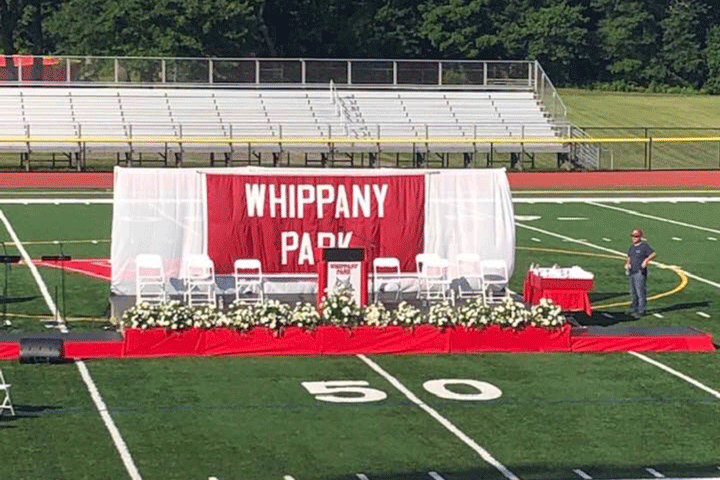
HANOVER TOWNSHIP — Dr. Gerard Freda, President of Hanover Park Regional High School District, conferred the diplomas of 169 graduates at the 51st Graduating Class of Whippany Park High School on Thursday, June 27.

Evan George Woytas receiving his diploma from Dr. Freda

Class of 2019 officers are Ryan Slotnick, President; Nicole Hingos, Vice President, Brianna Swan, Secretary; Catherine Werther, Treasurer and Student Council Representatives were Tafari Dempster, Alexa Forte, Lauren Kerwin and Chase Weckenmann. The Class Advisor was Mr. Michael Grillo.

Ryan Slotnick, President Class of 2019, “Presentation of Class Gift”

Among the graduating students were:

Keshav Agiwal
Imaan Ali
Nicole Amaya
Travis Stephen Anglin
Darnell Appiah
Sophia Isabella Baran
Kelly Elizabeth Belarmino
Nicholas John Benevento
Stephan Roman Bilyk
Sara Blair
Jaclyn Nicole Bougades
Makayla Boylan
Michael F. Bozz
Ryan Christopher Breen
Jessica Gertrude Brunner
Brandon Matthew Butkus
James Pasquale Casalino
Olivia Rose Cashen
Mark Eli Chen
Rocco Angus Chichelo
Victoria Choe
Samuel Benjamin Christou
Nicole Elizabeth Ciavatta
Allie Grace Cimaglia
Noele Mary Ciottone
Samantha Catherine Conrads
Jordan Avery Conte
Nicole Shanna Davey
Jason A. Davidson
Alexandra Isabel DeAngelis
Lauren Angela DeDreu
Shaniya A. DeLain
Brianna Elizabeth Della-Calce
Nicholas S. Demitre
Tafari Rashad Orlando Dempster
Jack DePiro
Matthew Dill
Grace Campbell Dimmick
Brendan Patrick Doonan
Cara Elizabeth Downey
Michael Patrick Dugan Jr.
Indeveer Singh Dulku
Alina Duong
Nina Mae Ferraiuolo
Briana Aaliyah Fleming
Alexa Michelle Forte
Kelly Marie Galka
Patrick Jeffrey Gast
Mallory Grace Gerondeau
Caitlin Marie Gethins
Natalia Concetta Giampietro
Matthew 0. Ginarte
Michael Goodwin
Allison Marie Gould
Nicholas Steven Graessle
Andrew Ryan Griffin
Katherine Ruth Grosso
Jordan Elliot Handler
Alan Joseph Haynes
Marcos Jesus Hernandez
Nicole C. Hingos
Daniel Hu
Eric Kevin Huynh
Andrew Philip Jankiewicz
Katherine Ruth Grosso
Jordan Elliot Handler
Alan Joseph Haynes
Marcos Jesus Hernandez
Nicole C. Hingos
Daniel Hu
Eric Kevin Huynh
Andrew Philip Jankiewicz
Kendall Ann Kazimar
Lauren Elizabeth Kerwin
Ashley Noel Keymer
Hannah Elise Klein
Carly Lucille Knauss
Andrew J. Korn
Zorian Maksym Kovbasniuk
Travis Robert Kowalskie
Madeline Rose Lake
Ryan Lapinski
Dillon La Stella
Maria Angela Leach
Hannah Lee
Justin Seth Lerner
Joanna Chaozo Lili
Mia Elizabeth-Rose Lizzo
Christine Mary Lombardino
Matthew Loth
Noelle Marie Luzzi
Ryan Mautone
Megan Elizabeth Marano
Cameron Jordan Martin
Christian London Martin
Francesca McCaffrey
Shea Erin Mccloskey
Andrew James McCormick
Jack Paul McElgunn
Kerri McGrath
Vincent James McGuire
Anthony Joseph McKenna
Robert Melendez
Pietro Gerard Mennonna
Gabriella Antonietta Mess
Keith R. Millahn-Lewis
Avianna Janessa Miller
Jake Tyler Millman
Anthony Michael Miranda
Michael Anthony Miranda Jr.
Anthony M. Moghaddam
Andrea Jo Molinare
Nicole Carol Molinare
Connor 0. Mowen
Erin Elizabeth Murphy
Jennifer Nicole Nivelo Illescas
Julianna Marie Ombaldo
Lance Juancho Mangahas Pagulayan
Brianna Pallitto
Michael Denis Paskert
Harshill Patel
Ryan K. Paul
Matthew James Peck
Julia Cia-Joan Peluso
Julie Phan
Bryan A. Pichardo
Amanda Louise Post
Daniel Silvani Poulter
Caroline Maria Ramundo
Kelsey Erin Rapp
Ivan Richter
Julian Rivera
Michael Joseph Roma
Erica Blair Rosenbaum
Raimy N. Saad
Ella Marie Santiago
Sean Savercool
Christopher Patrick Schneider
Nicholas Kurt Scholz
Sabina Alexa Schuele
Brandon Michael Schwab
Tyler Serna
Nicholas Alexander Sette
Nicole J. Shen
Ryan J. Sieradzki
Katherine Elizabeth Siverson
Ryan Maxwell Slotnick
Ethan Sonnasinh
Brandon A. Sosa
Grant Spencer
Torianna Rose Stigliano
David Su
Brianna Nicole Swan
Nicholas Thomas Tichenor
Samantha Jenna Tognetti
Nicholas Michael Vassallo
Cara Maria Ventrone
Olivia Sue Villamagna
Bryce Robert Vogt
Carolyn Yan Wang
Chase Michael Weckenmann
Catherine Irene Werther
Savanna Marie Wesselius
Kyra Mikayla Wilson
Evan George Woytas
Kate Lauren Wrigley
Matthew Wu
Katarina Grace Yacuk
Andrew William Zachary
Julia L. Zheng
Cristiano David Zipeto
Alexandra Maria Zipse

Whippany Park Class of 2019 is dismissed
Jordan Conte is happy to be out
Ryan Slotnick, Nicholas Sette and Mr. Grillo
Carly Knauss and Natalia Giampietro

Lake Hopatcong Closed To Swimming Due To Algae

0

MORRIS COUNTY — The Department of Environmental Protection is advising the public to avoid swimming in or contact with Lake Hopatcong water due to an extensive Harmful Algal Bloom, or HAB, confirmed this week by aerial surveillance.

Using highly specialized sensors, the DEP’s Division of Water Monitoring and Standards’ aerial surveillance on Wednesday confirmed that large areas of Lake Hopatcong are experiencing cyanobacteria blooms. The rapid spread of the bloom may be the result of heavy rainfall carrying nutrient-laden stormwater into the lake, followed by periods of warm weather. The DEP will monitor cyanobacteria levels until the lake is determined to be safe for recreational contact. Based on the widespread nature of the HAB, the recreational advisory may be in place for weeks, if not longer. The duration of a Harmful Algal Bloom is unpredictable and may be influenced by availability of nutrients and weather conditions. In many cases in 2018, HAB was observed on water bodies well into the fall season. Often referred to as blue-green algae, cyanobacteria are not true algae but are capable of excessive growth through photosynthesis. Cyanobacteria blooms are usually a bright green, but can also appear as spilled paint, “pea soup,” or as having a thick coating or “mat” on the surface. These blooms can often be confused for typical algae blooms. Exposure can cause a range of health effects, including rashes, allergy-like reactions, flu-like symptoms, gastroenteritis, respiratory irritation, skin rashes and eye irritation.

As a precaution, the DEP is recommending that local health authorities close all public swimming beaches along the lake due to the widespread nature of the bloom. Straddled by Sussex, Passaic and Morris counties, Lake Hopatcong is New Jersey’s largest lake and is a popular tourist and vacation destination. The DEP is working through the Lake Hopatcong Commission to notify municipal governments and local health agencies of the advisory. Recreational exposure can occur while swimming, wading and during watersport activities such as jet skiing, kayaking, wind-surfing and paddle-boarding. The DEP is advising the public to avoid these activities and all contact with water from Lake Hopatcong until further notice. People also should not eat fish caught in the lake or allow pets to come in contact with lake water or drink the water. Limited blooms were reported and responded to by the DEP in Lake Hopatcong beginning on June 17. In recent days, the DEP has received more than 30 reports of HABs on Lake Hopatcong, including reports of people experiencing mild skin rashes after coming in contact with lake water.

Because monitoring indicated the blooms were becoming more widespread, the DEP conducted aerial surveillance using a highly specialized sensor to estimate cell counts. Estimated cell counts in many areas of the lake exceeded health guidance levels. The DEP is conducting ongoing water sampling to confirm levels. Cyanobacteria are naturally present in lakes and streams in low numbers. Under suitable environmental conditions – sunlight, high nutrients, warm temperatures and calm water – dense cyanobacterial blooms can form. In recent years, the DEP and the New Jersey Department of Health have been enhancing Harmful Algal Bloom surveillance and response efforts across the state. In 2017, the DEP launched a campaign to educate the public about these blooms and provide resources on how to report them to the DEP. The “Avoid It and Report It” campaign advises the public to take the following steps when a suspicious bloom is observed:

• Avoid contact with water in the vicinity of the bloom, especially in areas where the bloom is dense and forms scum;
• Do not drink or consume the water;
• Do not eat fish from the waterbody;
• Keep pets and livestock away from the water;
• Do not allow animals to drink the water, eat dried algae, or groom themselves after coming into contact with the water;
• People, pets and livestock that come into contact with a bloom should rinse off with fresh water as soon as possible;
• Seek medical attention or a veterinarian if a person or animal is experiencing adverse health effects after exposure to a bloom;
• Report a suspected HAB by calling the DEP Hotline at 1-877-WARNDEP (877-927-6337) send a mobile alert through the WARN NJDEP mobile app (available via iTunes, Google Play or Windows Phone) or report via the DEP’s HAB website by clicking here.

The state’s response strategy covers freshwater lakes, rivers, and streams with potential public access, recreational use, and freshwater bathing beaches (including licensed beaches). While these waterbodies may also be sources of drinking water in New Jersey, the focus of the response strategy is recreational use. DEP works closely with drinking water systems to plan for HABs as well as all other drinking water emergencies. The DEP’s HAB website is available by clicking here.

contains information on both freshwater cyanobacterial HABs, and a variety of marine water HABs. Highlights include an electronic cyanobacterial HAB Reporting Form, downloadable Advisory signs and flyers for use for HAB events, a general cyanobacterial fact sheet, and a more detailed fact sheet on recreational exposure and health effects related to cyanobacterial HABs. General information about cyanobacterial HABs, what to do if people or pets are exposed, links to the EPA and U.S. Centers for Disease Control’s HABs websites and other resources, as well as a gallery of both HAB and non-HAB photos of lakes and streams, are also provided. For questions regarding the freshwater harmful algal bloom strategy, call DEP’s Bureau of Freshwater and Biological Monitoring at (609) 292-0427 or email [email protected].

Translate »